
Lampranthus zeyheri
Lampranthus zeyheri
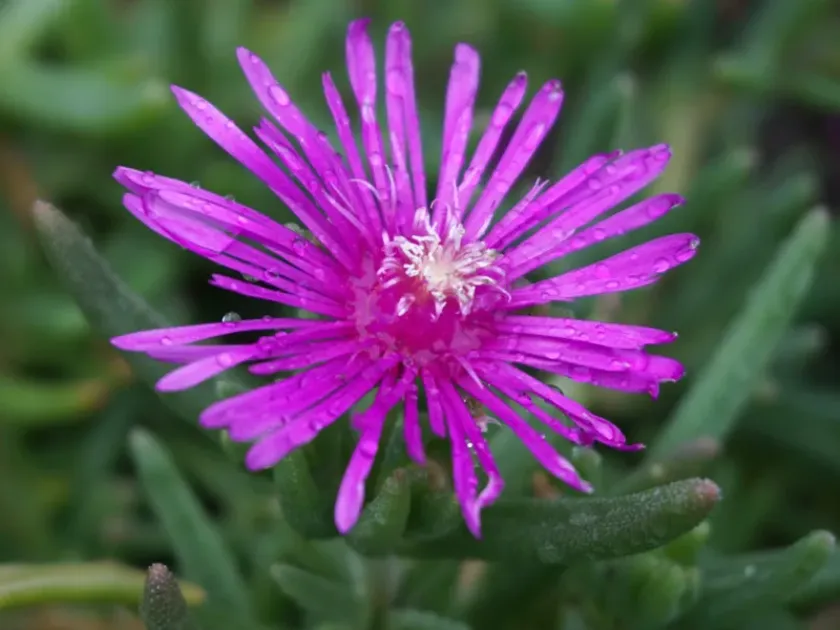
Description
Sowing dates
Lampranthus zeyheri belongs to the Aizoaceae family. This culture is typically propagated through seeds or cuttings during the spring season to ensure rapid establishment.
For sowing seeds, a light, sandy substrate is essential to provide optimal drainage. Seeds should be surface-sown and covered with a thin layer of sand while maintained at a steady temperature.
Cuttings represent the most reliable method for preserving desirable plant characteristics. Stems are cut in early summer and allowed to air-dry for several days before planting.
Successful propagation requires careful acclimatization of seedlings to full sun exposure to prevent sunburn on tender tissues during the initial growth phase.
Watering must be minimal for seedlings, as excess moisture is the most common cause of failure in the early stages of development due to root sensitivity.
Growing requirements
This species is native to South Africa and requires maximum sunlight to maintain its compact form and produce vibrant, colorful blooms throughout the season.
The growing medium must be nutrient-poor and extremely porous. Using specific mixes for cacti and succulents enriched with gravel or coarse sand is highly recommended.
Watering frequency should be low, allowing the soil to dry out completely between sessions. The plant is drought-tolerant but suffers significantly from waterlogged conditions.
During the active growth phase, the plant prefers temperatures between 20 and 25 degrees Celsius. A cooler winter period is necessary to ensure healthy dormancy.
Lampranthus zeyheri is well-adapted to low atmospheric humidity, making it an ideal choice for sunny greenhouses, rock gardens, or dry, climate-appropriate landscapes.
Main diseases and pests
Root rot is the primary threat to the health of the plant, almost always caused by improper watering techniques or poor drainage within the potting container.
Mealybugs are the most common pests, often clustering in leaf axils where they sap the plant's vitality. Regular inspections are crucial for early detection.
Spider mites can occasionally infest the plant, particularly in conditions with stagnant air and extremely low humidity. Systemic acaricides are effective for control.
Aphids may target new growth and flower buds during the spring. Prompt identification and the use of insecticidal soap can effectively prevent major outbreaks.
Disease prevention is primarily based on following correct agrotechnical practices, including proper ventilation and avoiding over-saturation of the substrate.