
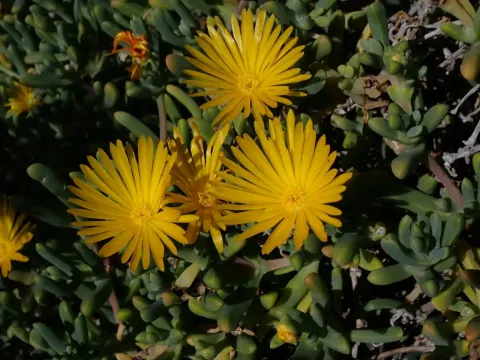
Malephora
Malephora
Malephora is a genus of succulent plants belonging to the Aizoaceae family. These plants are characterized by their ability to thrive in arid environments, storing water within their fleshy, often triangular leaves.
What the section contains


Malephora
Originating from South Africa, Malephora species are adapted to regions with high solar radiation and low precipitation. They are widely used as low-maintenance ground cover plants in xeriscaping and landscape architecture.
The botanical structure of Malephora is defined by its prostrate stems, which readily root at the nodes. This habit allows the plant to form dense, mat-like colonies, effectively covering the ground and preventing moisture evaporation.
For optimal development, this crop requires full sun exposure. While it can tolerate partial shade, insufficient sunlight usually leads to etiolation, loss of leaf density, and a significant reduction in flower production.
Soil requirements focus on drainage. A porous, sandy, or rocky substrate is ideal to ensure that water does not accumulate around the roots. In agricultural settings, ensuring a high infiltration rate is more important than soil fertility.
The primary threats to Malephora are related to moisture management. Overwatering or poorly draining soil often leads to root rot, caused by fungal pathogens such as Pythium, which can decimate an entire planting in a short period.
Mealybugs are the most common insect pests associated with these succulents. They settle in the tight spaces between leaves, making them difficult to detect and treat without targeted systemic insecticides or horticultural oils.
Aphids can target young growth during the spring season, causing deformation of leaves and buds. Frequent monitoring is necessary to catch infestations early, as aphids can quickly colonize large areas of the plant.
Spider mites can occur under hot, dry conditions. They damage the plant by piercing leaf tissues, which results in discolored spots and stunted growth, necessitating appropriate acaricide treatments.
Cultural control remains the most effective strategy. By maintaining a balance between irrigation and soil drainage, and ensuring good air circulation around the plants, growers can significantly reduce the pressure from both diseases and pests.