
Lampranthus glaucoides
Lampranthus glaucoides
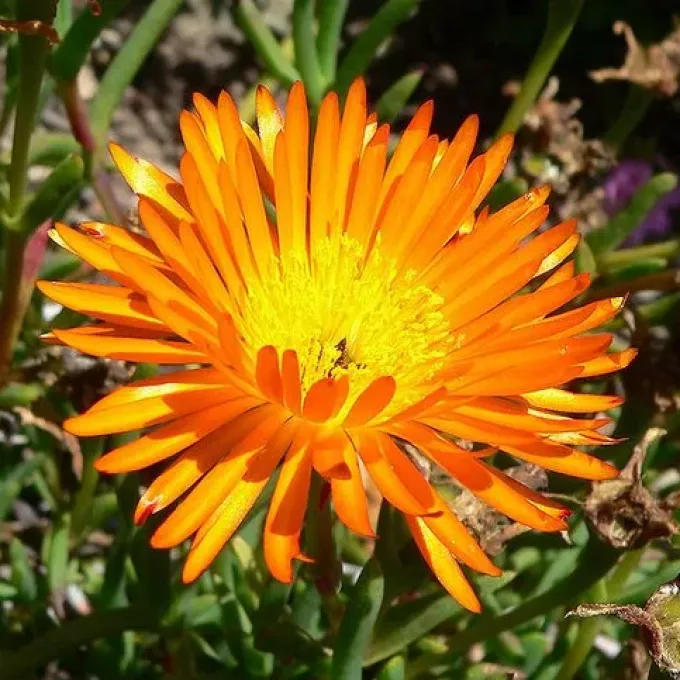
Description
Sowing dates
Lampranthus glaucoides is a succulent species belonging to the Aizoaceae family, native to the arid landscapes of South Africa where it thrives in rocky soils.
Propagation is typically carried out via seeds, which should be sown in a very porous, well-draining mineral-based substrate during the early spring months.
The seeds require light to germinate; therefore, they should be scattered on the surface and pressed down gently without covering them with soil.
Maintaining a stable temperature range of 20°C to 22°C is essential for achieving a high percentage of germination success in a controlled environment.
Once the seedlings develop their first true leaves, they should be carefully transplanted into small pots, ensuring that the roots are not damaged during the process.
Growing requirements
This crop is strictly photophilous, requiring full sun exposure to maintain its compact growth habit and to induce the development of its characteristic flowers.
Soil structure is critical for this species; it must be highly permeable to prevent water retention, which is the primary cause of plant failure in professional cultivation.
Irrigation practices must be precise: the soil should be allowed to dry out completely between waterings to simulate the natural arid cycle of the plant's habitat.
The crop performs best in temperatures that avoid extreme fluctuations, and it needs a dry, cool period during winter to initiate the flowering phase for the next season.
Proper aeration of the growing space is mandatory to prevent stagnant air conditions, which can lead to rapid fungal proliferation around the plant base.
Main diseases and pests
The most significant threat to Lampranthus glaucoides is root rot, which occurs almost exclusively as a result of poor drainage or overwatering the substrate.
In humid conditions, the plant is susceptible to various pathogens that attack the succulent tissues, leading to rapid tissue decay and the eventual collapse of the crop.
Pest management should focus on common succulent invaders, including mealybugs and spider mites, which thrive in environments where airflow is insufficient.
Integrated pest management strategies are recommended, utilizing mechanical removal or targeted biological control agents to minimize chemical use on the plants.
Regular monitoring of the lower leaf surfaces is advised, as this is where early signs of pest infestations or fungal growth are most likely to be detected by the grower.