
Glaucous Lampranthus
Lampranthus glaucus
Description
Growing requirements
Lampranthus glaucus, known as the Glaucous Lampranthus, is a perennial succulent shrub belonging to the Aizoaceae family. Originating from the arid regions of South Africa, it has evolved to thrive in harsh, sun-drenched environments with poor, rocky soils.
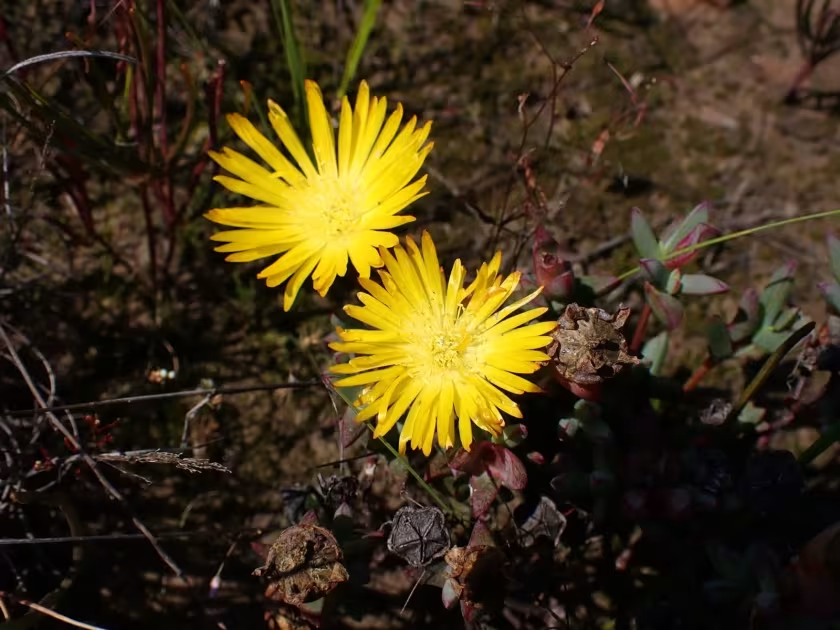
This plant is characterized by its succulent, glaucous foliage and vibrant, daisy-like yellow flowers. The plant's structure is low-growing and spreading, making it an excellent candidate for xeriscaping and ground cover in suitable climates.
High light intensity is essential for the healthy growth of Lampranthus glaucus. It requires full, direct sun for most of the day to trigger flower production. Insufficient light results in elongated stems and a drastic reduction in bloom frequency.
Regarding soil requirements, the plant demands extremely well-draining media. Standard garden soil is usually too moisture-retentive; therefore, it is standard practice to use a substrate mixed with coarse sand or perlite to mimic the native drainage conditions of its origin.
Climate tolerance is restricted to warm, frost-free zones. In regions where temperatures drop below freezing, the plant must be cultivated in containers and moved indoors or managed as an annual, as it does not possess natural resistance to cold weather.
Main diseases and pests
Excessive soil moisture is the primary threat to the health of the Glaucous Lampranthus, frequently leading to root rot. To mitigate this risk, irrigation schedules must be strictly managed, allowing the soil to dry out completely between waterings.
Poor ventilation can trigger fungal outbreaks, most notably powdery mildew. Maintaining adequate space between plants and ensuring optimal air circulation is critical for preventing the spread of fungal spores in dense plantings.
Pest issues often include mealybugs and spider mites, which thrive in dry or enclosed conditions. These pests damage the succulent leaves by extracting cellular fluids, often leaving behind a weakened and stunted plant structure.
Integrated pest management protocols should involve regular monitoring and the judicious use of horticultural soaps or systemic insecticides if infestations occur. Prompt identification is key to limiting the scope of any pest outbreak.
Regular maintenance, such as pruning faded flowers and trimming overgrown stems, is essential for plant vitality. This practice not only preserves the aesthetic quality of the crop but also removes potential habitats for pests and disease spores.