
Orange ice plant
Lampranthus aurantiacus
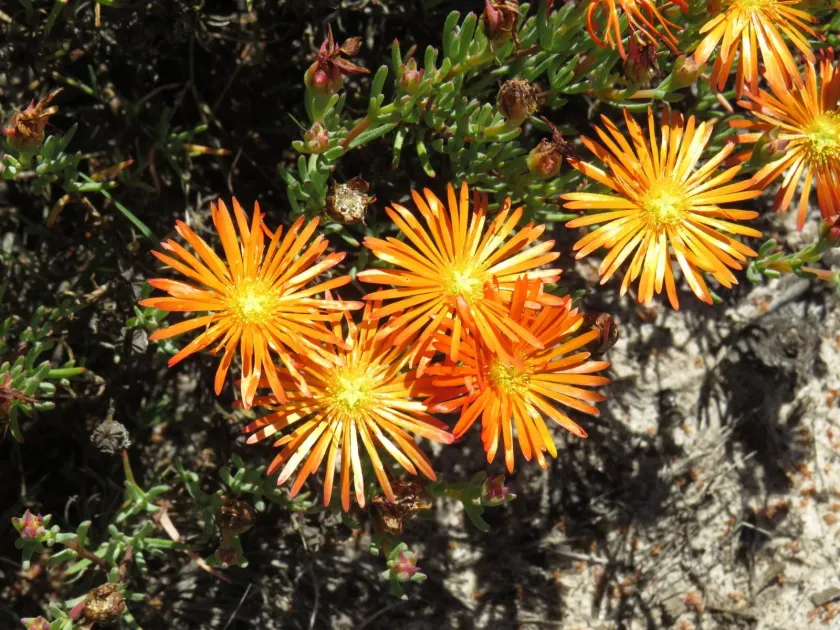
Description
Sowing dates
Sowing of the orange ice plant seeds typically occurs in early spring to allow the seedlings sufficient time to establish before the peak summer heat.
The substrate for germination must be exceptionally well-draining, consisting of a mix of sand, perlite, and a small amount of sterile potting soil.
Seeds are sown on the surface of the growing medium, as they require light to germinate, and should be pressed gently into the surface rather than buried.
Maintaining a constant temperature of approximately 20°C and high humidity under a cover is essential until the seeds begin to sprout.
Once seedlings have developed their second set of true leaves, they can be carefully transplanted into individual pots with excellent drainage holes.
Growing requirements
The orange ice plant is a succulent member of the Aizoaceae family, naturally adapted to the arid and rocky landscapes of South Africa.
This species demands full solar exposure; it is a sun-loving plant that produces its characteristic vivid orange flowers only when exposed to intense direct light.
The soil profile must mimic its native environment, being gritty, mineral-based, and poor in organic matter to prevent water accumulation near the roots.
Irrigation must be approached with caution, following a 'soak and dry' method, where the soil is allowed to dry out completely between watering sessions.
Proper airflow is crucial for the health of the plant, as stagnant, humid air can quickly lead to physiological stress and the development of pathogens.
Main diseases and pests
Root rot caused by excessive moisture in the root zone is the most significant threat to the survival of the orange ice plant in non-native climates.
Mealybugs are common pests that tend to hide in the joints of the succulent leaves, requiring manual removal or specialized insecticidal treatments.
Spider mites may infest the foliage during periods of low humidity, causing stippling and general decline of the plant's aesthetic appearance.
Fungal infections, particularly Botrytis, can occur if water remains on the leaves for extended periods, especially in shaded or poorly ventilated areas.
Preventative measures include maintaining a dry canopy, ensuring adequate sunlight, and removing any decaying foliage to prevent the spread of mold.