
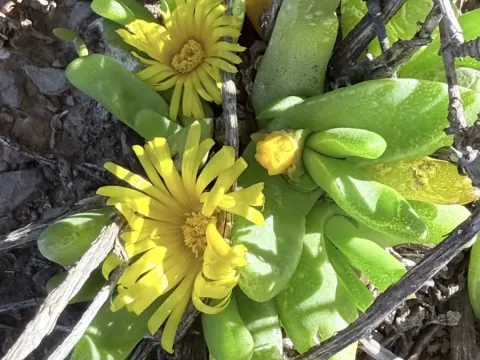
Glottiphyllum
Glottiphyllum Haw. ex N. E. Br.
Glottiphyllum is a genus of succulent plants within the Aizoaceae family, native to the arid environments of South Africa. As a cultivated crop, these plants are highly valued in the nursery industry for their distinct succulent leaves and vibrant flowers, which bloom under optimal conditions.
What the section contains

Glottiphyllum
Cultivation requires a habitat that mimics the South African desert environment. High intensity light is non-negotiable; insufficient sunlight will cause etiolation, where the plant grows weak, elongated stems that lack structural integrity and aesthetic appeal.
The substrate must be extremely well-draining to prevent root rot. A standard mix should consist of two parts coarse sand or perlite and one part organic matter such as peat or leaf mold. This structural composition allows for quick aeration of the root zone after irrigation.
Temperature management is crucial: during the growing season, temperatures between 20°C and 30°C are preferred. During winter, a dormancy phase is mandatory, requiring cooler temperatures around 10°C to 15°C and very limited water to promote healthy spring flowering.
Propagation is primarily done via seeds or cuttings. When using cuttings, it is vital to let the cut surface callus for several days in a shaded area before placing it into the growing medium to prevent infection. Seedlings require warmth and high humidity initially, followed by gradual drying as they mature.
The primary threat to Glottiphyllum is overwatering, which leads to fungal infections and rapid decay of the fleshy leaves and roots. Maintaining a dry soil environment is the most effective preventative measure against these systemic rots.
Mealybugs are the most common pest affecting this genus, often hiding in the crevices between leaf pairs. Their feeding damages the epidermis, potentially leading to secondary bacterial infections that can destroy the plant tissue rapidly.
Spider mites can also become a significant issue in low-humidity environments, such as heated indoor spaces during winter. These pests create fine webbing and cause discoloration on the leaf surface, which necessitates the use of miticides or high-pressure water rinses.
Scale insects may also attach to the plant, appearing as small bumps. While harder to detect initially, they weaken the plant significantly by draining essential fluids, and mechanical removal combined with systemic treatment is often necessary.
Good air circulation is essential to prevent mold growth on the leaf surfaces, especially in high-humidity climates. Ensuring plants are not overcrowded in the greenhouse or display area helps mitigate the risk of cross-contamination by pests or disease spores.