
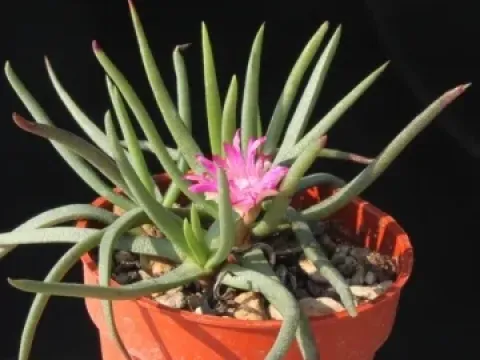
Marlothistella
Marlothistella
Marlothistella belongs to the Aizoaceae family and is a compact, drought-tolerant succulent originating from the arid regions of South Africa. Its biology is perfectly adapted to survive in nutrient-poor, rocky environments with extreme diurnal temperature fluctuations.
What the section contains


Marlothistella
For successful cultivation, the plant requires a highly porous and well-draining substrate. A professional cactus mix, amended with extra pumice or coarse grit, is recommended to ensure that moisture does not remain stagnant around the delicate roots.
The culture thrives under high-intensity light conditions, preferring sunny window sills or specialized greenhouse environments. Direct sunlight is crucial for maintaining the plant's structural integrity and preventing etiolation, which often causes the succulent to lose its aesthetic form.
Watering practices should be conservative, following the 'soak and dry' method strictly. It is imperative to wait until the potting medium is entirely desiccated before providing water, as excessive humidity is the primary cause of physiological stress and root collapse.
During the winter dormancy period, the plant requires cooler temperatures, ideally ranging between 10-12 degrees Celsius. Reducing water to a minimum during this time mimics its native winter dormancy, promoting stronger growth and more robust flowering in the subsequent season.
Fungal pathogens remain the most significant threat to Marlothistella, primarily triggered by overwatering or inadequate air circulation. These infections typically manifest as dark, mushy spots that spread rapidly across the plant's tissue.
Mealybugs are the most common pests encountered, often hiding in the crevices between fleshy leaves. Consistent monitoring and immediate application of systemic insecticides are necessary to control populations before they cause structural damage.
Root rot is a debilitating condition resulting from stagnant moisture in the substrate. If identified early, the plant can be salvaged by unpotting, removing necrotic root sections, and allowing the remaining healthy root ball to callus before replanting in fresh, dry soil.
Spider mites can become problematic in low-humidity environments, particularly during dry winter months. Maintaining moderate ventilation and using specialized miticides are effective strategies for managing these small pests.
Soil-borne nematodes represent a hidden danger, often introduced through non-sterilized soil components. Using inorganic, heat-treated materials for potting helps prevent these pests from damaging the root system and stunting the overall growth of the succulent.