

Reference · Crops
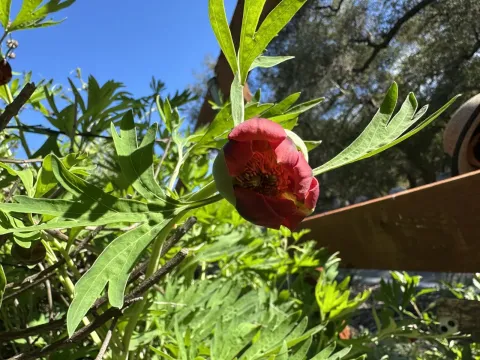
Peony
Paeonia L.
Propagation of peonies (Paeonia L.) is primarily performed through the vegetative method of division, which ensures that the offspring retain the exact traits of the parent cultivar.
14
items
What the section contains
 Chinese peony
Paeonia lactiflora Pall.
Chinese peony
Paeonia lactiflora Pall.
 Chinese peony
Paeonia lactiflora x Paeonia delavayi
Chinese peony
Paeonia lactiflora x Paeonia x lemoinei Rehder
Chinese peony
Paeonia lactiflora x Paeonia delavayi
Chinese peony
Paeonia lactiflora x Paeonia x lemoinei Rehder
 Common peony
Paeonia officinalis L.
Common peony
Paeonia officinalis L.
 Delavay's Tree Peony
Paeonia delavayi Franch.
Delavay's Tree Peony
Paeonia delavayi Franch.
 Jishan peony
Paeonia jishanensis T. Hong & W. Z. Zhao
Jishan peony
Paeonia jishanensis T. Hong & W. Z. Zhao
 Lemoine peony
Paeonia x lemoinei Rehder
Lemoine peony
Paeonia x lemoinei Rehder
 Ludlow's peony
Paeonia ludlowii (Stern & Taylor) D. Y. Hong
Ludlow's peony
Paeonia ludlowii (Stern & Taylor) D. Y. Hong
 Osti Peony
Paeonia ostii T. Hong & J. X. Zhang
Osti Peony
Paeonia ostii T. Hong & J. X. Zhang
 Paeonia obovata
 Maxim.
Paeonia obovata
Paeonia obovata Maxim. subsp. obovata
Paeonia obovata
Paeonia obovata Maxim.
Paeonia obovata
Paeonia obovata Maxim. subsp. obovata
 Qiu's Peony
Paeonia qiui Y. L. Pei & D. Y. Hong
Qiu's Peony
Paeonia qiui Y. L. Pei & D. Y. Hong
 Rock's peony
Paeonia rockii (S. G. Haw & Lauener) T. Hong & J. J. Li ex D. Y. Hong
Rock's peony
Paeonia rockii (S. G. Haw & Lauener) T. Hong & J. J. Li ex D. Y. Hong
 Tree peony
Paeonia suffruticosa Andrews
Tree peony
Paeonia suffruticosa Andrews
Marketplace
Products in this section · 12


Peony
The optimal time for dividing and transplanting peony roots is late summer to early autumn, coinciding with the plant's natural dormancy period.
While spring planting is technically feasible, it is generally discouraged as it imposes significant stress on the plant, often delaying its establishment and bloom.
A healthy division must feature a portion of the fleshy rootstock along with at least 3 to 5 dormant buds to ensure successful growth in the upcoming season.
Strategic planting depth is essential: buds should be placed no deeper than 5 centimeters below the soil surface to prevent poor flowering or complete failure to bloom.
Peonies belong to the family Paeoniaceae and thrive in open, sunny locations with protection from strong winds to prevent mechanical damage to heavy flowers.
The ideal growing medium is deep, well-drained, fertile loam soil with a slightly acidic to neutral pH level for optimal nutrient availability.
Proper drainage is a critical requirement, as standing water around the roots quickly leads to root rot, which is the primary cause of failure in peony crops.
Originating from temperate regions of the Northern Hemisphere, these plants are highly cold-hardy and undergo a necessary period of dormancy during winter.
Ongoing maintenance includes regular hydration, particularly during the critical developmental stages of bud initiation and flower head expansion.
Botrytis blight (gray mold) is the most destructive fungal disease for peonies, frequently occurring under conditions of excessive humidity and poor air circulation.
Foliar diseases such as rust can also impact the health of the foliage, reducing the plant's ability to store energy for the next year's growth.
Pest pressures commonly involve aphids and ants, which can damage the developing flower buds and serve as vectors for various plant pathogens.
Sanitation practices are vital: all foliage must be cut back and removed from the field in autumn to destroy overwintering sites for fungal spores.
Integrated pest management, including regular soil cultivation and the targeted use of fungicides, is necessary to maintain high-quality commercial yields.
Peonies are cultivated commercially for the florist trade, where quality of bloom and stem length are the primary economic drivers for production.
Harvesting for the market occurs when the buds reach the soft-bud stage, ensuring the flowers can be stored and transported without premature opening.
Correct cutting techniques are essential: harvesters must leave a significant portion of foliage on the plant to support ongoing root development and health.
Professional production requires a rigorous fertilization schedule focused on balancing nitrogen, phosphorus, and potassium to support long-term field productivity.
When managed properly, a peony planting can remain highly productive for decades, making it a valuable long-term asset in horticultural operations.