
Paeonia tenuifolia
Paeonia tenuifolia
Description
Sowing dates
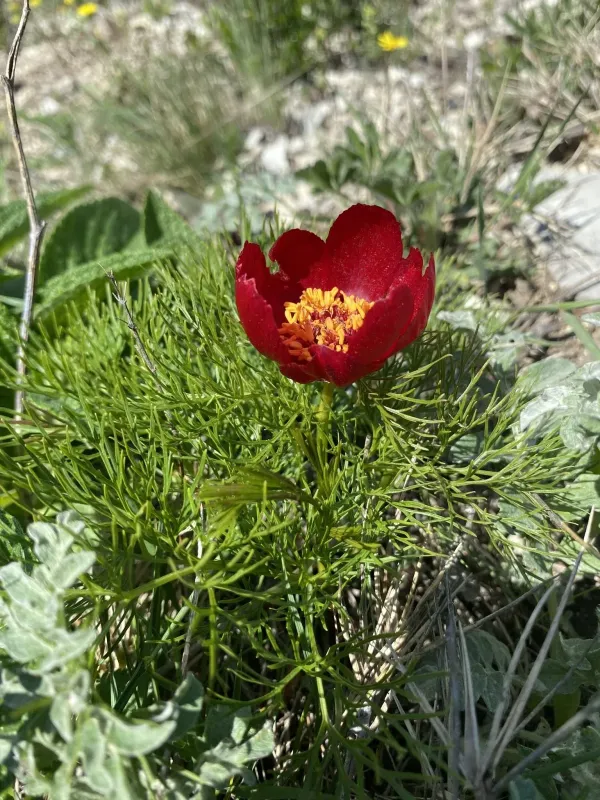
Paeonia tenuifolia, commonly known as the fernleaf peony, is a distinctive perennial belonging to the Paeoniaceae family. It is highly valued for its deeply dissected, feathery foliage and brilliant red, bowl-shaped flowers that appear in early spring.
Propagation is primarily achieved through root division, which should ideally be performed in late summer or early autumn. This allows the plant to establish its root system before the onset of winter dormancy.
When propagating from seeds, sow them in the fall for natural stratification. However, be aware that seedlings are slow to mature and may take up to five years to produce their first blooms, requiring significant patience from the grower.
The optimal planting site must receive full sun to ensure healthy growth and vigorous flowering. Fernleaf peonies do not tolerate competition well, so planting areas should be cleared of aggressive weeds and grasses to ensure maximum nutrient availability.
Planting depth is crucial: the dormant buds, or 'eyes', should be covered by only 5 cm of soil. Planting too deep is a common reason for the plant failing to bloom, as the crown requires specific temperature cues to initiate flower bud formation.
Growing requirements
As a plant naturally adapted to steppe habitats, Paeonia tenuifolia thrives in well-drained, slightly alkaline soil. It is exceptionally tolerant of heat and drought once established, reflecting its evolutionary origin in rocky grasslands.
Soil structure is the most important factor for success. In heavy clay soils, the addition of grit or coarse sand is essential to prevent water accumulation, as the tuberous roots are highly susceptible to rot in consistently wet conditions.
The fernleaf peony is quite hardy and performs well in regions with cold winters, provided there is good soil drainage. In areas with high winter humidity, raised beds or sloped ground can help prevent the crown from sitting in excess water.
Regular fertilization is not strictly necessary for established plants, but a light application of a low-nitrogen, high-phosphorus fertilizer in early spring can support strong stem development and enhance bloom quality.
The plant has a short growing season compared to common garden peonies. After flowering and seed maturation, the foliage will naturally begin to yellow and wither, marking the start of the summer dormancy period which is vital for the plant's health.
Main diseases and pests
The primary threats to this species are fungal diseases, most notably Botrytis blight. This condition often manifests as blackened, wilting stems or buds and is primarily triggered by poor air circulation and excessive atmospheric humidity.
Root rot, caused by various soil-borne pathogens, is a lethal threat if the planting site is poorly drained. Prevention relies entirely on ensuring the soil stays loose and that the crown is not buried too deeply in organic mulch or wet soil.
Pests such as aphids and flower thrips can cause damage during the spring growth phase. Aphids tend to cluster on soft, new shoots, while thrips can cause discoloration and deformation of the delicate petals as they unfurl.
Management of these pests should be cautious. During the flowering period, it is best to avoid broad-spectrum insecticides to protect beneficial pollinators that are attracted to the vivid red blooms.
- Ensure ample spacing between plants for consistent air movement.
- Remove and dispose of all diseased foliage at the end of the season.
- Maintain a clean growing area by weeding regularly.
- Apply fungicidal treatments only as a preventive measure in early spring.
- Monitor the crown area closely for signs of waterlogging.