
Tree peony
Paeonia suffruticosa Andrews
Description
Growing requirements
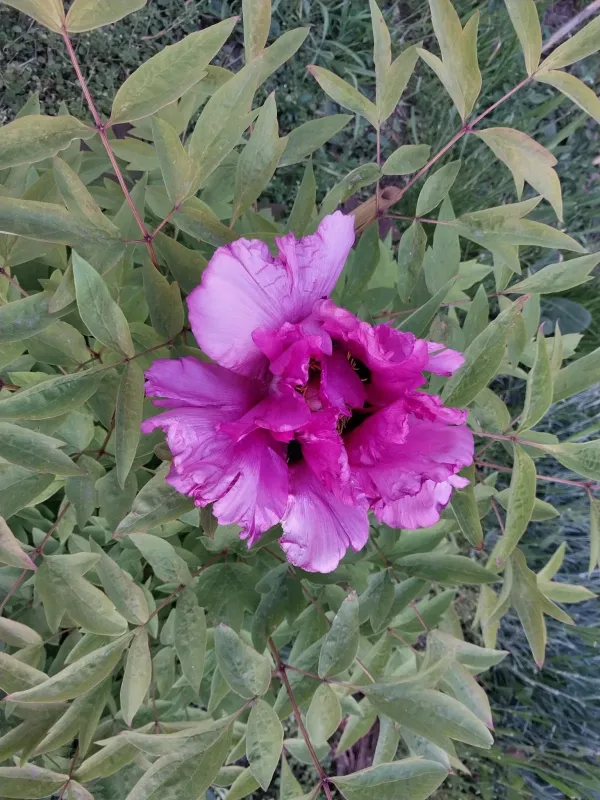
The tree peony (Paeonia suffruticosa) is a deciduous shrub belonging to the Paeoniaceae family, distinct from herbaceous varieties due to its woody stems that persist through the winter. These plants can grow into impressive shrubs reaching up to 2 meters in height.
Originating from China, the tree peony has been cultivated for centuries for its large, spectacular blooms and historical significance. It thrives in temperate climates, requiring a site that provides ample sunlight but is sheltered from harsh, drying winds.
Success in cultivation relies heavily on soil structure; the plant demands deep, fertile, and well-drained soil with a slightly alkaline pH. Drainage is of paramount importance, as waterlogged conditions quickly induce root rot, which is often fatal to the shrub.
Regular maintenance includes consistent, moderate watering during the growing season and periodic mulching to retain soil moisture while keeping the roots cool. Pruning is limited to the removal of dead wood and spent flowers to encourage vigorous growth in the subsequent year.
Beyond its ornamental value in landscaping, Paeonia suffruticosa has historical significance in traditional medicine. The root bark is harvested for specific medicinal extracts, demonstrating the plant's dual utility as both a decorative garden asset and a pharmacological resource.
Main diseases and pests
Gray mold (Botrytis cinerea) is the most prevalent fungal disease, particularly in humid or stagnant air conditions. It causes wilting and decay of buds and stems, necessitating the removal of infected parts and the application of appropriate fungicides.
Insect pests, including aphids and scales, can weaken the plant by feeding on sap, while subterranean grubs may damage the roots. An integrated pest management approach, emphasizing clean cultivation and regular monitoring, is recommended for healthy growth.