
Corsican peony
Paeonia corsica
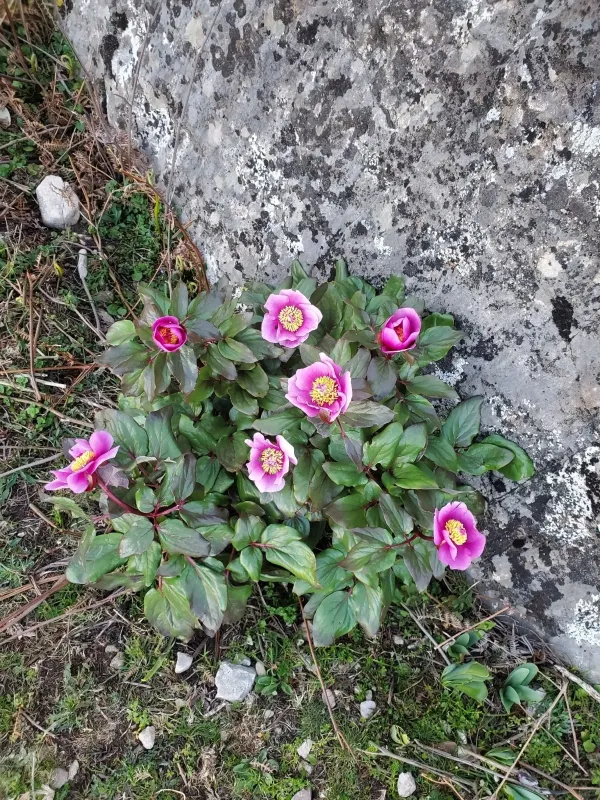
Description
Sowing dates
The Corsican peony is a rare perennial herbaceous plant belonging to the Paeoniaceae family. In cultivation, it is most commonly propagated through vegetative division of the rhizomes in the autumn, when the plant enters a period of dormancy.
Seed sowing is a more complex and time-consuming process, used primarily by breeders. The seeds require mandatory stratification, which mimics natural temperature fluctuations to ensure successful germination in the spring.
The optimal time for dividing the plant and planting seedlings is in late August or September. During this period, the root system has sufficient time to adapt to new soil conditions before the onset of winter frosts, ensuring better establishment.
The planting site should be carefully prepared in advance, as the Corsican peony is highly sensitive to transplantation. It is essential to select well-drained areas with enough space for the development of its robust root system.
Spacing between adjacent plants should be at least 80–100 centimeters. This distance ensures proper air circulation and prevents moisture accumulation, which is a critical factor in preventing fungal diseases.
Growing requirements
This species has specific environmental requirements dictated by its natural habitat in the mountainous regions of Corsica, Sardinia, and other Mediterranean islands. The plant prefers moderately lit areas but can tolerate partial shade.
The soil should be slightly acidic or neutral, rich in humus, and possess excellent permeability. Waterlogging is detrimental to this species and often leads to the rotting of the fleshy roots.
In colder climates, the plant requires winter protection because it is evolutionarily adapted to a mild Mediterranean climate. Mulching with peat or spruce branches helps protect the root system from freezing during snowless winter periods.
The culture responds positively to the application of organic fertilizers, such as well-rotted compost. Mineral fertilizers should be applied sparingly, avoiding nitrogen excess, which can stimulate excessive vegetative growth at the expense of flowering.
Regular but moderate watering is necessary during the vegetation period, particularly during bud formation. It is important to ensure that water does not touch the leaves, which minimizes the risk of pathogen development.
Main diseases and pests
The Corsican peony is susceptible to several diseases typical of the genus, with Botrytis (gray mold) being the most dangerous. It affects stems, leaves, and buds, especially under conditions of high humidity and poor air movement.
Powdery mildew can also pose a threat in the second half of summer. To combat this and other fungal infections, the use of copper-based fungicides or specialized systemic products is effective.
Root rot is a major issue often caused by improper cultivation practices, such as planting too deeply or using heavy, poorly drained soil. Preventive measures include proper site selection and sanitation of planting material.
Among pests, aphids causing damage to young shoots and nematodes are the most problematic. Regular visual inspections allow for early detection of infestations and timely application of insecticides.
To maintain a healthy crop, it is recommended to follow good gardening practices, including keeping the site clean by removing debris, which can harbor fungal spores and pest larvae during the winter.