

SKU #74411
·
66 views
Honeysuckle
Lupin
User rating
0 votes0% positive reviews
No ratings yet — be the first.
Usage
Decor
Plant Height
80-150
Registration year
2020
Prices in stores
from337.31 €per 1 kg
pack from 3.37 € per 10 g
4 offers from 2 stores
Store offers · 4 from 2 stores
Prices are updated on loadLoading offers…
Available at: Baza Proraba · Zhiva Apteka
Aggregator catalog: prices are collected automatically from store websites, normalized by AI and converted at the current exchange rate. Before ordering, confirm the price and availability on the store's website. This block is not indexed by search engines — the data is loaded after the page opens.
About product

A versatile legume variety for soil restoration, organic fertilization, and effective landscaping.
Usage
Decor
Plant Height
80-150
Registration year
2020
Description
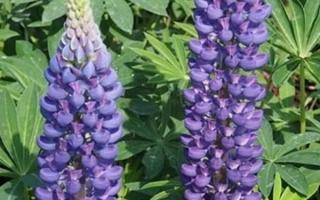
Practical Application of 'Barvinok' Lupine
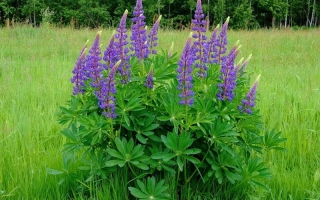
Developed by the National Scientific Center 'Institute of Agriculture of NAAS', the 'Barvinok' lupine variety is a strategic choice for land management. It serves as both a powerful soil conditioner and a high-reaching decorative element, making it a versatile tool for farmers and gardeners focusing on sustainable cultivation.
Key Scenarios for Utilization
- Soil Structure Improvement: The robust root system of 'Barvinok' acts as a natural tiller, penetrating and loosening dense soil layers. This increases water infiltration and aeration, which is vital for preparing fields for subsequent demanding crops.
- Nitrogen Fixation and Green Manuring: As a legume, this variety is an expert at capturing atmospheric nitrogen. Incorporating the green mass into the soil serves as a high-quality organic amendment, reducing dependency on synthetic fertilizers.
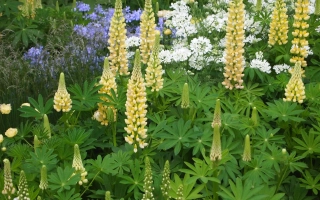
- Landscape and Windbreak Functions: With a height ranging from 80 to 150 cm, this lupine is frequently used as a screen or backdrop. Its dense growth habit acts as a physical barrier against weeds, effectively suppressing their growth in the area and minimizing the need for manual or chemical weeding.
For those managing plots in Ukraine, 'Barvinok' provides a reliable solution for biomass production in a short timeframe. Whether you are aiming to revitalize depleted soil or create an aesthetically pleasing perimeter for your homestead, this variety delivers consistent performance and biological resilience.
Crop & resistance
Crop
Specifications
| Usage | |
|---|---|
| Plant Height | 80-150 |
| Registration year | 2020 |
| Catalog | Catalog → Lupin |
| Legal data |
Show · 1
|
| Country | Ukraine |
Not yet комментариев. Be the first!





See also
Often considered together with this variety

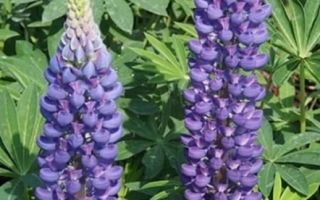
Lupinus polyphyllus
Volyn State Agricultural Experimental Station
056 3 offers
1.14 €per 1 kg ≈ 59 ₴


Recently viewed
Products you’ve viewed on this site
Reviews · 0