

SKU #71868
·
57 views
Reliable
Lupin
User rating
0 votes0% positive reviews
No ratings yet — be the first.
Usage
Decor
Plant Height
100-120
Registration year
2007
About product

A reliable decorative perennial variety that offers both aesthetic beauty and practical soil-enrichment benefits.
Usage
Decor
Plant Height
100-120
Registration year
2007
Description
The Value of Lupin "Nadezhny" in Land Management
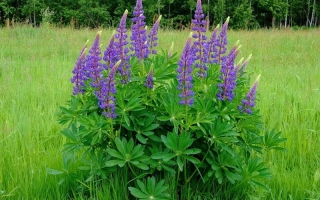
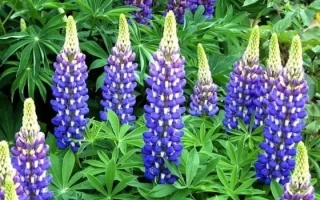
The "Nadezhny" variety, developed by the Williams FRC for Fodder Crops (VIC), is a perennial lupin variety primarily utilized for its aesthetic properties and structural benefits in land management. Reaching a height of 100–120 cm, the plant serves as a robust component in professional landscaping and garden design.
Practical Applications for Farm and Land Management
- Landscaping and Perimeter Control: Due to its significant height and vibrant floral displays, this variety is highly effective for creating decorative boundaries, windbreaks, and layered floral compositions.
- Soil Enrichment: As a member of the legume family, "Nadezhny" acts as a natural soil improver. It fixes atmospheric nitrogen, enhancing soil fertility for subsequent crop rotations without the need for intensive chemical fertilizers.
- Weed Suppression: The dense foliage and rapid growth cycle allow the variety to outcompete weeds, helping to manage fallow areas or meadow perimeters with minimal herbicide intervention.
Opting for the "Nadezhny" variety is a choice for reliability and low-maintenance vegetation. It is specifically adapted to the climatic conditions of its origin, demonstrating notable resilience to temperature fluctuations. This makes it an ideal choice for reclamation projects and perennial green zones that require minimal annual upkeep while maintaining a clean, professional appearance.
Crop & resistance
Crop
Specifications
| Usage | |
|---|---|
| Plant Height | 100-120 |
| Registration year | 2007 |
| Catalog | Catalog → Lupin |
| Legal data |
Show · 1
|
| Country | Russia |
Store offers
Prices are updated on loadLoading offers…
Available at: Green Edem
Aggregator catalog: prices are collected automatically from store websites, normalized by AI and converted at the current exchange rate. Before ordering, confirm the price and availability on the store's website. This block is not indexed by search engines — the data is loaded after the page opens.
Not yet комментариев. Be the first!





See also
Often considered together with this variety

Lupinus polyphyllus
Volyn State Agricultural Experimental Station
056 3 offers
1.14 €per 1 kg ≈ 59 ₴



Recently viewed
Products you’ve viewed on this site
Reviews · 0