
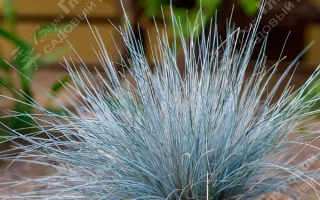


SKU #70966
·
38 views
VIK 35
Fescue
User rating
0 votes0% positive reviews
No ratings yet — be the first.
Assignment
Lawn, Erosion Control, Decorative
Recommended sowing rate (g/m²)
20-30
Registration year
2025
About product

A durable, disease-resistant variety designed for erosion control and high-quality landscaping.
Assignment
Lawn, Erosion Control, Decorative
Recommended sowing rate (g/m²)
20-30
Registration year
2025
Description
VIK 35: A Proven Choice for Erosion Control and Landscaping
In the field of domestic turfgrass breeding, the VIK 35 variety from the Williams FRC (FNC VIK im. V.R. Williams) stands out as a reliable, time-tested solution. Developed to meet rigorous requirements, this variety is widely recognized for its endurance and versatility, serving both as a functional component for soil reinforcement and as a staple for high-quality decorative turf.
Areas of Application
The primary value of VIK 35 lies in its adaptability to diverse environmental conditions. It is specifically engineered to excel in several key areas:
- Turf Development: Ideal for creating dense, uniform grass covers in both residential and public landscaping projects.
- Anti-Erosion Stabilization: The variety features a robust and extensive root system, making it highly effective at binding soil on slopes, embankments, and waterfronts to prevent erosion.
- Decorative Landscaping: It balances aesthetic appeal with strong physical resilience, suitable for various ornamental settings.
Disease Resistance and Cultivation
One of the most compelling aspects of VIK 35 is its natural genetic resistance to common turf pathogens, including powdery mildew and a variety of rots. This innate resilience reduces the reliance on intensive chemical management, making it a cost-effective and environmentally friendly choice for large-scale landscaping projects.
To ensure proper stand density and maximum ground coverage, the recommended seeding rate is 20–30 g/m². By adhering to these guidelines, practitioners can establish a resilient sod that stands up to both mechanical wear and environmental stress.
Crop & resistance
Disease resistance
Specifications
| Assignment | |
|---|---|
| Recommended sowing rate (g/m²) | 20-30 |
| Registration year | 2025 |
| Catalog | Catalog → Fescue |
| Legal data |
Show · 1
|
| Country | Russia |
Store offers
Prices are updated on loadLoading offers…
Aggregator catalog: prices are collected automatically from store websites, normalized by AI and converted at the current exchange rate. Before ordering, confirm the price and availability on the store's website. This block is not indexed by search engines — the data is loaded after the page opens.
Not yet комментариев. Be the first!
Alternatives
Fescue seeds · similar varieties


See also
Often considered together with this variety





Recently viewed
Products you’ve viewed on this site
Reviews · 0