


SKU #70982
·
37 views
Russian
Fescue
North Caucasian FARCUser rating
0 votes0% positive reviews
No ratings yet — be the first.
Assignment
Lawn, Feed, Decorative
Leaf Decorativeness
Blue-green
Registration year
1997
About product

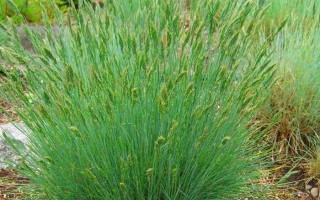
A versatile fescue variety with a distinct bluish-green hue, combining lawn aesthetics with high forage productivity.
Assignment
Lawn, Feed, Decorative
Leaf Decorativeness
Blue-green
Registration year
1997
Description
A Universal Solution for Aesthetics and Nutrition
The 'Rossiyanka' fescue, a development by SKFNATS, occupies a unique niche in modern grassland farming. Unlike highly specialized lawn mixtures, this variety demonstrates remarkable versatility: it handles decorative landscaping tasks and high-nutrition forage production with equal efficiency.
Key Advantages
- Visual Appeal: The leaf blades feature a distinct bluish-green hue, giving turf a refined, cool appearance. This makes the variety an ideal choice for landscaping in temperate climates.
- Dual Purpose: In professional agriculture, 'Rossiyanka' is valued for its role in intensive forage production. The plant recovers rapidly after mowing while maintaining high nutritional value, which is crucial for livestock management.
- Scientific Background: Developed by the North Caucasus Federal Scientific Agrarian Center (SKFNATS) under the leadership of V.V. Kravtsov and A.N. Chernyshov, the variety is bred for extreme winter hardiness and drought resistance.
Who is 'Rossiyanka' for?
This variety is an optimal solution for agricultural enterprises that combine livestock farming with land management. If you need a crop that won't wither under the sun while providing high-quality biomass, this is an economically sound investment. A notable characteristic to keep in mind is the need for care during the first weeks of vegetation; like many fescue varieties, 'Rossiyanka' requires protection from weeds until fully established. Once the turf is formed, it becomes highly resilient and aggressively displaces weeds, resulting in a dense and aesthetically pleasing cover.
Specifications
| Assignment | |
|---|---|
| Leaf Decorativeness | |
| Registration year | 1997 |
| Catalog | Catalog → Fescue |
| Manufacturer | North Caucasian FARC |
| Legal data |
Show · 4
|
| Country | Russia |
Store offers
Prices are updated on loadLoading offers…
Aggregator catalog: prices are collected automatically from store websites, normalized by AI and converted at the current exchange rate. Before ordering, confirm the price and availability on the store's website. This block is not indexed by search engines — the data is loaded after the page opens.
Not yet комментариев. Be the first!
Alternatives
Fescue seeds · similar varieties



See also
Often considered together with this variety







Recently viewed
Products you’ve viewed on this site
Reviews · 0