


SKU #70962
·
39 views
SAKHAROVSKAIA
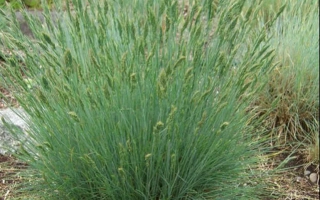
Fescue
User rating
0 votes0% positive reviews
No ratings yet — be the first.
Assignment
Wheat Flour Production
Type
Oat grass
Registration year
1973
Store offers · 1 from 1 stores
Prices are updated on loadLoading offers…
Available at: Добродар
Aggregator catalog: prices are collected automatically from store websites, normalized by AI and converted at the current exchange rate. Before ordering, confirm the price and availability on the store's website. This block is not indexed by search engines — the data is loaded after the page opens.
About product

A reliable meadow fescue variety with high Fusarium resistance, perfect for productive hayfields.
Assignment
Wheat Flour Production
Type
Oat grass
Registration year
1973
Description
Stability and Forage Value: 'Sakharovskaya' Meadow Fescue
The 'Sakharovskaya' meadow fescue variety is a result of breeding efforts by the Kalininskaya State Regional Agricultural Experimental Station and the All-Russian Research Institute of Reclaimed Lands. This variety has established itself in the forage production sector as a reliable crop for developing long-term pastures and hayfields.
Agronomic Profile
Meadow fescue is prized for its high adaptability, and 'Sakharovskaya' stands as a benchmark for resilience. A key advantage of this breeding line is its pronounced resistance to Fusarium head blight, which is critical for maintaining the quality of green mass and seeds in high-humidity regions. Unlike many introduced varieties, 'Sakharovskaya' is well-adapted to the climatic conditions of high-risk farming zones, demonstrating consistent development.
Applications
- Forage Production: The variety forms a high-quality sward that boasts high digestibility. It is an ideal component for establishing cultivated meadows.
- Technical Use: Despite its primary use as a forage crop, certain characteristics of this variety allow it to be used as a raw material component in the feed industry, where crop purity and predictable processing indices are required.
By choosing this variety, farmers receive a predictable yield over several years of stand exploitation. 'Sakharovskaya' does not require complex agronomic management, responding effectively to fertilization and timely mowing cycles, making it a rational choice for operations focused on reducing the cost of their feed base.
Crop & resistance
Disease resistance
Specifications
| Assignment | |
|---|---|
| Type | |
| Registration year | 1973 |
| Catalog | Catalog → Fescue |
| Legal data |
Show · 2
|
| Country | Russia |
Not yet комментариев. Be the first!
Alternatives
Fescue seeds · similar varieties


See also
Often considered together with this variety





Recently viewed
Products you’ve viewed on this site
Reviews · 0