
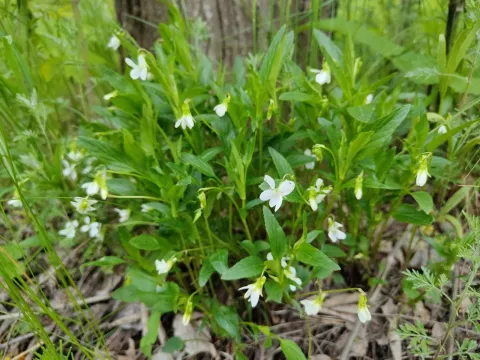
Dwarf violet
Viola pumila
Viola pumila, commonly known as the dwarf violet, belongs to the Violaceae family. This perennial herb is native to European and Siberian regions, where it primarily inhabits meadows and floodplain environments.
What the section contains
Dwarf violet
Botanically, the plant is distinguished by its narrow, lanceolate leaves and slender, upright stems that typically reach a height of 5 to 20 centimeters. It blooms with pale violet flowers during the late spring period.
The species requires sunny locations with consistent soil moisture to thrive. It performs best in nutrient-rich loamy soils that can retain sufficient water throughout the growing season.
Climatic requirements involve moderate temperatures and protection from extreme heat. The plant is hardy but requires adequate moisture levels to avoid wilting, especially in open, sunny field conditions.
Cultural maintenance involves routine weeding to prevent competition from taller plants, as the dwarf violet is sensitive to shading and can be quickly outcompeted in dense vegetation.
The dwarf violet is susceptible to powdery mildew, a fungal infection that often thrives in poorly ventilated areas with high humidity, causing a white coating on the leaves.
Pests such as aphids and spider mites frequently target the plant, feeding on cell sap and causing distorted growth or premature leaf drop if left uncontrolled.
Slugs and snails represent a significant threat to the vegetative parts of the plant, particularly in spring when the young shoots are most tender and vulnerable to grazing.
Root rot is a common issue if the growing medium lacks proper drainage, leading to water stagnation that compromises the health of the plant's delicate root system.
To minimize these threats, growers should practice proper spacing to ensure airflow, maintain consistent hydration, and use sustainable pest management techniques when necessary.