
Evergreen violet
Viola sempervirens
The evergreen violet (Viola sempervirens) is a perennial herbaceous plant belonging to the Violaceae family. It is native to the western regions of North America, where it thrives in moist, coniferous forest environments and shaded woodlands.
What the section contains
Evergreen violet
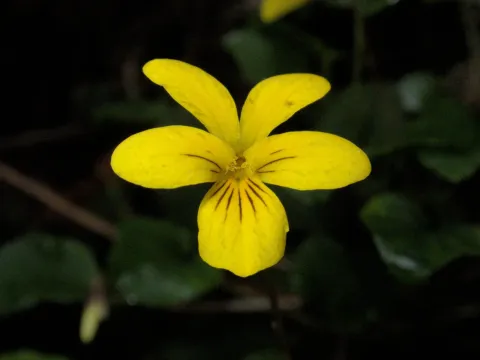
Botanically, this species is defined by its trailing stems and small, rounded, evergreen leaves that possess a leathery texture. During early spring, the plant produces distinctive pale yellow flowers with delicate violet veins, providing a subtle aesthetic appeal.
Cultivation requirements involve providing a rich, well-draining soil that mimics the forest floor. A slightly acidic pH level is ideal for healthy growth, along with consistent moisture levels to sustain the foliage during the warmer months of the year.
This plant is specifically adapted to shade or partial shade, making it unsuitable for areas with direct, scorching sunlight. Protecting the plant from dry winds and ensuring high air humidity in the garden is essential for its long-term survival and propagation.
In terms of agricultural and horticultural use, the evergreen violet serves as an excellent groundcover for shady borders and rock gardens. Its ability to maintain its foliage through the winter makes it a valuable asset for year-round landscape design.
The primary threats to Viola sempervirens are fungal pathogens, specifically those causing root rot, which typically occur in soils with poor drainage or excessive water accumulation.
Powdery mildew and various leaf spot fungi can become problematic during periods of high humidity and poor air circulation, often leading to premature leaf drop.
Slugs and snails are major pests that feed on the succulent leaves of the plant, often causing significant aesthetic damage if not controlled during the spring growth phase.
Aphids may occasionally infest the flower buds and tender shoots, requiring regular inspection to prevent the spread of viral diseases that these insects can transmit.
Effective management includes maintaining clean growing conditions, providing adequate spacing between plants to improve airflow, and applying targeted organic controls when necessary.