
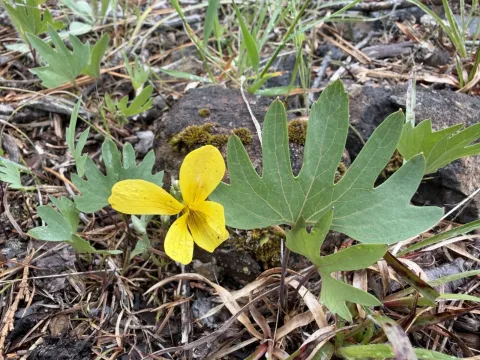
Pine violet
Viola lobata
Sowing Pine violet seeds outdoors is recommended in the late autumn, as the seeds require a long period of cold stratification to break dormancy successfully.
What the section contains
Pine violet
If sowing in the spring, seeds must be kept in the refrigerator for 4–6 weeks prior to planting to simulate natural winter conditions and improve germination rates.
The optimal planting depth for these seeds is no more than 0.5 cm, as they require a minimal amount of light to trigger the germination process effectively.
Seedlings of Viola lobata tend to emerge unevenly, and the process can take several weeks, necessitating consistent moisture levels in the growing medium.
For indoor propagation, sow seeds in March in a light, sterile potting mix while maintaining temperatures between +15 and +18 degrees Celsius for best results.
The Pine violet is a perennial herbaceous plant belonging to the Violaceae family, native to the forested mountainous regions of California.
This species thrives in partial shade and prefers loose, well-draining soil that is rich in organic matter, mimicking the natural woodland floor environment.
The plant demonstrates moderate drought tolerance but requires regular watering during the active growth and blooming season to prevent root stress.
Successful cultivation requires soil with a slightly acidic to neutral pH, as the plant is sensitive to environments with excessively high lime content.
In regions experiencing intense summer heat, the plant often enters a dormant stage, shedding leaves or slowing growth, which makes mulching essential.
The primary threats to the Pine violet include fungal infections like gray mold and powdery mildew, which thrive in conditions with poor air circulation.
Slugs and snails are considered the most damaging pests, often feeding on young foliage and tender stems, which can quickly ruin the plant's aesthetic value.
Poor drainage and waterlogging frequently lead to root rot, which is a major cause of failure for this perennial when grown in heavy clay or wet soils.
In greenhouses or crowded garden beds, the plants may become susceptible to spider mite infestations, particularly during periods of low humidity and high heat.
To minimize pest and disease risks, provide adequate spacing between individual plants and avoid overhead watering to keep the foliage dry as much as possible.