
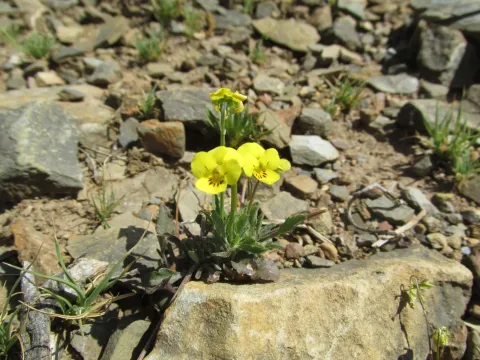
Viola langeana
Viola langeana
Viola langeana is a perennial herbaceous plant belonging to the Violaceae family. It is a strictly endemic species naturally found in the high-altitude mountain ranges of the Iberian Peninsula, where it thrives in specialized niches.
What the section contains
Viola langeana
The species is botanically adapted to rocky substrates, screes, and alpine crags. Its root system is structured to anchor the plant firmly in shallow soils, making it highly dependent on the stability of the mountain environment.
In terms of climatic requirements, this plant prefers cool summers and stable, cold winters with consistent snow cover. High humidity levels in the atmosphere are essential for maintaining the health of the foliage throughout the active growing season.
Soil requirements revolve around excellent drainage and a neutral to slightly acidic pH. The plant cannot withstand waterlogged conditions, as the roots are highly susceptible to oxygen deprivation in compacted or swampy soils.
In cultivation, recreating the natural alpine habitat is paramount. This includes the use of rocky, mineral-rich substrates and ensuring that the plant is placed in an environment that mimics the temperature fluctuations of a high-altitude ecosystem.
The primary threat to the stability of Viola langeana populations is the accelerating impact of climate change. As temperatures rise, the limited suitable high-altitude habitats for this endemic species continue to shrink.
Pathogenic threats include various root rot fungi that thrive in poorly drained environments. If the soil remains overly damp, these pathogens can rapidly degrade the plant's structural integrity, leading to irreversible wilting.
Pests, particularly certain species of aphids and specialized mites, target the tender tissues of the flower stalks and leaves. These infestations can significantly reduce the plant's ability to produce viable seeds for the next generation.
Human interference, including trampling in sensitive alpine areas and habitat disturbance from mountain tourism, poses a chronic threat. Such activities can physically destroy the fragile plants and alter the local soil structure.
Conservation strategies must focus on protected area management to prevent degradation. Continuous ecological monitoring is necessary to track disease outbreaks and respond to shifts in population density due to environmental changes.