
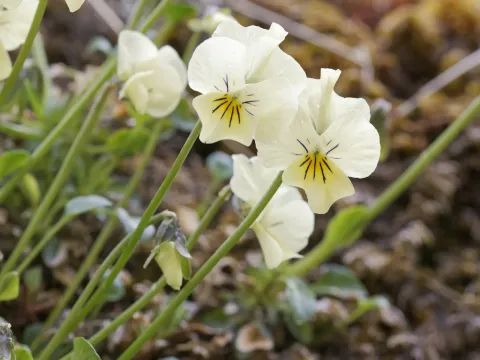
Viola eugeniae
Viola eugeniae
Viola eugeniae is a distinct perennial herbaceous plant belonging to the Violaceae family. It is an endemic species native to the high-altitude mountainous regions of the Apennines in Italy, where it thrives in specialized rocky environments.
What the section contains
Viola eugeniae
The plant exhibits specific botanical adaptations, such as a compact rosette growth habit and a resilient root system designed to anchor the plant in loose, stony substrates. It is highly adapted to the short growing season characteristic of alpine and subalpine meadows.
Requirements for successful cultivation center on soil structure. The medium must be extremely well-draining, consisting primarily of mineral components like grit, sand, and limestone chippings. Organic matter should be kept to a minimum to avoid promoting root decay.
Climate preferences involve full exposure to sunlight and efficient air circulation. While Viola eugeniae is frost-hardy, it requires a dry dormancy period during winter, protected from freezing rain or excessive moisture accumulation around the crown.
Agricultural management is minimal but precise. Water should be applied sparingly, allowing the substrate to dry out between sessions. The lack of nutritional requirements means that fertilization should be minimal, as high nitrogen levels can compromise the plant's structural integrity.
Primary threats to Viola eugeniae in cultivation include fungal pathogens such as Pythium and Phytophthora, which are triggered by waterlogged conditions. These diseases can devastate a collection within days if drainage is inadequate.
Pest pressures are primarily exerted by gastropods like slugs and snails, which find the foliage particularly attractive during humid spells. Physical barriers, such as copper tape or crushed eggshells, are recommended to protect individual specimens.
Aphid infestations may occur during the spring flush, causing stunted growth and leaf distortion. Integrated pest management, focusing on predatory insects, is the preferred method for maintaining the health of these sensitive alpine plants.
Powdery mildew can become a concern in environments with poor airflow. Maintaining adequate spacing between plants and ensuring they are situated in an open, windy location minimizes the risk of fungal outbreaks.
Ongoing monitoring is essential for identifying early signs of distress. Any tissue showing signs of rot should be excised immediately to prevent the spread of infection to the remainder of the plant or neighboring specimens.