
Viola hybrids
Viola hybrids
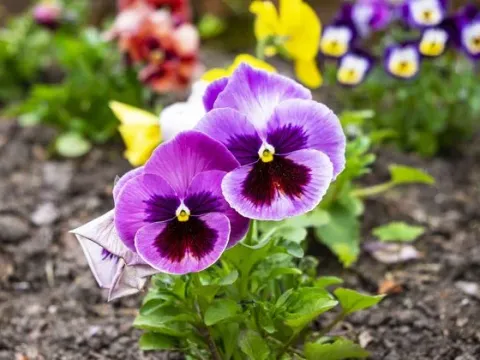
Viola hybrids, commonly known as pansies, belong to the Violaceae family. In commercial production, they are typically treated as annuals or biennials, depending on the planting schedule and climate zone.
What the section contains
Viola hybrids
For early spring blooms, seeds are sown in trays indoors during late winter, usually February. A light, well-draining, and sterile peat-based medium is ideal for starting the seeds.
Since Viola seeds require darkness for optimal germination, they should be lightly covered with a thin layer of vermiculite or growing mix. Maintaining a consistent soil temperature of 18–20°C is crucial during the early stages.
Once seedlings emerge, it is necessary to provide bright light and lower the temperature to 15°C to prevent leggy growth. Proper air circulation at this stage is vital to avoid dampening-off disease.
Seedlings are pricked out into larger containers or plug trays once the first set of true leaves develops. They are sturdy plants that respond well to transplanting and grow vigorously when provided with adequate spacing.
Viola hybrids thrive in cool to moderate climates, making them perfect for spring and autumn displays. They prefer locations that receive full sun to partial shade during the growing season.
The soil should be rich in organic matter and well-draining. A pH level between 5.5 and 6.5 is optimal to ensure proper nutrient uptake and vibrant flower coloration throughout the season.
Regular watering is essential, but the soil should be allowed to dry slightly between irrigations. Excessive moisture in the root zone is a common cause of failure in Viola production.
Balanced liquid fertilizers should be applied every two weeks to support continuous bloom production. Excessive nitrogen can lead to lush foliage growth at the expense of flower development.
In regions with hot summers, mulch is recommended to keep the root zone cool. Proper management of soil temperature and moisture levels directly influences the duration of the flowering period.
Common diseases affecting Viola hybrids include root rot and stem rot, often caused by poor drainage or excessive watering. Powdery mildew may appear on leaves during periods of high humidity.
Leaf spots caused by various fungi can be problematic in crowded, poorly ventilated planting areas. Applying fungicides is effective, but cultural practices like spacing and sanitation remain the primary control methods.
Pests such as aphids and spider mites are frequent intruders that target young shoots and buds. Integrated pest management, including regular monitoring and the use of insecticidal soaps, is highly effective.
Slugs and snails can cause significant damage to young foliage, especially during moist spring weather. Protective measures such as baiting or physical barriers are often necessary in affected areas.
Maintaining a clean growing environment and removing infected plant tissue immediately helps prevent the spread of pathogens throughout the entire crop population.
The commercial harvest of Viola hybrids is centered on the production of healthy, flowering potted plants. Market readiness is determined by the development of strong stems and multiple open blooms.
Deadheading—the removal of spent flowers—is an essential practice to extend the ornamental lifespan of the plant. This prevents seed formation and encourages the plant to direct energy toward new flowers.
For seed saving, select the most vigorous and representative plants. The seed pods should be harvested when they turn pale brown, just before they naturally split open to release their contents.
Seeds should be dried thoroughly in a well-ventilated, shaded area before being stored in cool, dry conditions. Proper storage ensures high germination rates for future planting cycles.
When harvesting for cut flowers, the stems should be cut early in the morning when the buds are just beginning to open to ensure maximum vase life.