
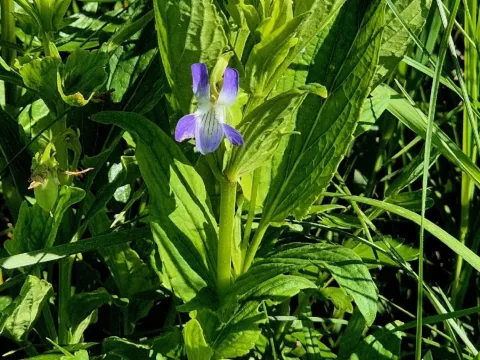
Viola elatior
Viola elatior
Viola elatior, commonly known as the tall violet, is a perennial herbaceous plant belonging to the Violaceae family. It is distinct from most common violet species due to its tall, upright, furrowed stem that can grow up to 60 centimeters in height.
What the section contains
Viola elatior
The native range of this species extends across the meadow ecosystems of Europe and parts of Western Siberia. It typically inhabits flood-plain meadows, humid forest fringes, and shrublands where the soil remains consistently moist throughout the growing season.
This species is well-adapted to temperate climate conditions but is highly sensitive to changes in hydrology. It thrives in environments where groundwater levels remain stable, making it an excellent indicator of healthy, undisturbed wetland meadow conditions.
Soil requirements are relatively specific, favoring loam or sandy-loam textures with a neutral to slightly alkaline pH. The plant avoids waterlogged, stagnant conditions as well as extremely dry soils, requiring a balanced level of aeration for its root system.
From an agricultural and conservation perspective, Viola elatior is not a conventional crop but a key species for maintaining biodiversity in natural grassland habitats. Efforts are primarily directed toward preserving its existing populations rather than cultivation.
The primary threats to Viola elatior involve large-scale land management changes. The drainage of flood plains for industrial agriculture and urbanization destroys the specific micro-climates necessary for the violet's survival.
Like many plants of the Violaceae family, it is susceptible to fungal pathogens such as powdery mildew and various leaf spot diseases, which often proliferate in poorly managed or overcrowded grassland areas.
Insect pests include specialized lepidopteran larvae, particularly those from the Fritillary butterfly group, which consume the foliage. While natural herbivory is normal, excessive pest pressure in weakened populations can severely limit seed production.
Intensive grazing and improper timing of mowing are significant threats. Excessive livestock pressure results in mechanical damage and soil compaction, which inhibits the growth of the sensitive root system of the tall violet.
Lack of appropriate vegetation management also poses a risk. Without occasional mowing, the succession of woody shrubs and aggressive tall grasses can shade out Viola elatior, which requires sufficient light to maintain its vigor and competitive edge.