
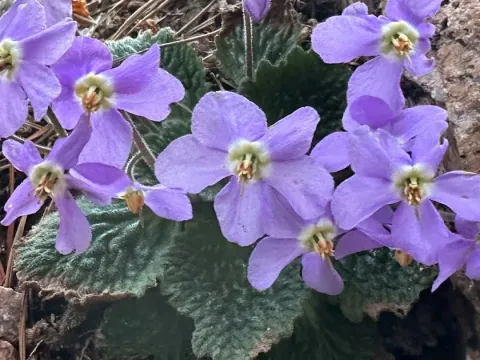
Viola delphinantha
Viola delphinantha
Viola delphinantha is a rare perennial plant belonging to the Violaceae family. It is an endemic species primarily found on the limestone cliffs and rocky crevices of the mountains in Northern Greece and Southern Bulgaria, making it a true botanical treasure.
What the section contains
Viola delphinantha
Botanically, this species is distinguished by its unique habit, featuring narrow, needle-like leaves and distinctive flowers with long spurs. These adaptations are essential for survival in the harsh, nutrient-poor conditions of high-altitude limestone mountains.
For successful cultivation, the species requires a highly specialized substrate that mimics its natural habitat. A mineral-rich, porous, and well-draining mixture with a neutral to slightly alkaline pH is essential to prevent root asphyxiation and rot.
Environmental requirements are strict: the plant prefers bright, indirect light and cool temperatures. High humidity combined with heat is detrimental to the plant, so adequate ventilation is a must for those attempting to grow this species outside its native alpine environment.
In terms of usage, Viola delphinantha is primarily valued in specialized alpine gardens and botanical collections. It is not a commercial crop for mass production, but rather a species for enthusiasts who can maintain the rigorous conditions required for its health.
The most significant threat to Viola delphinantha in cultivation is root rot caused by stagnant moisture. Inadequate drainage in potting or rock garden settings quickly leads to systemic decay of the plant's delicate root system.
Spider mites are common pests that can infest the foliage, particularly when the plant is kept in environments with low air circulation or during periods of dry heat. Regular monitoring and maintaining appropriate humidity levels are the best prevention strategies.
Gastropods like slugs and snails pose a major threat to tender young growth in early spring. Protecting the plants with physical barriers or targeted baiting is often necessary to prevent significant damage to the plant's structure.
Nutritional deficiencies, specifically those related to calcium and magnesium, can result in poor growth and chlorosis. Because the plant is native to calcareous soils, its internal metabolism is highly sensitive to the mineral composition of the growing medium.
To ensure long-term survival, it is crucial to avoid overcrowding. Proper spacing between plants promotes airflow, which is critical for preventing the spread of fungal pathogens in a greenhouse or alpine house setting.