
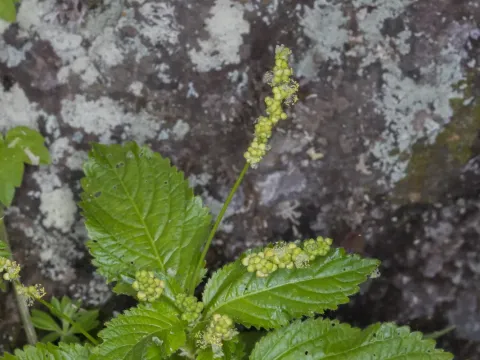
Mulberry-leaved nettle
Urtica morifolia
Mulberry-leaved nettle (Urtica morifolia) is a perennial woody shrub belonging to the Urticaceae family. This species is native to the Macaronesia region, particularly the Canary Islands and Madeira, where it thrives in specific island microclimates.
What the section contains
Mulberry-leaved nettle
The plant typically occupies humid, shaded forest environments. It prefers stable temperatures and consistent moisture levels, making it highly susceptible to dehydration if exposed to harsh, arid conditions.
For agricultural cultivation, the crop requires rich, loamy soils that provide excellent drainage while maintaining high moisture retention. Full sun exposure should be avoided as it compromises leaf health and plant vitality.
Its botanical structure is distinct, characterized by semi-woody stems and large, broad leaves that bear a striking resemblance to those of a mulberry tree, differentiating it from common herbaceous nettles.
In terms of utilization, it is rarely grown as a mass commodity, but it holds interest in specialty nurseries and as a regional botanical resource for traditional medicinal and forage research.
Like many species in the genus Urtica, the plant is susceptible to aphid infestations, which can rapidly colonize tender new growth during periods of peak development.
Fungal pathogens such as powdery mildew represent a significant threat, especially when ambient humidity is high and air movement around the canopy is insufficient.
Root rot, often caused by waterlogged soil conditions, is the most common physiological challenge, emphasizing the need for a precise irrigation schedule.
Management strategies involve rigorous sanitation, proper spacing to ensure airflow, and monitoring for early signs of foliar discoloration or insect activity.
Overall, maintaining the plant's health requires mimicking its natural, sheltered habitat conditions to prevent environmental stress that makes it more vulnerable to pests.