
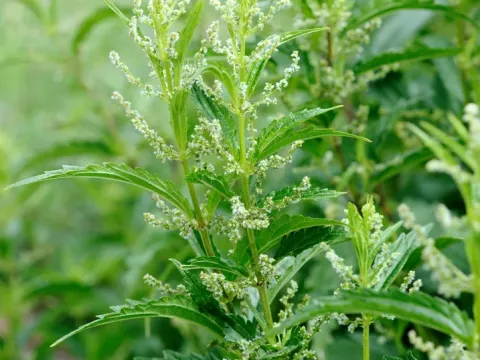
Narrow-leaf nettle
Urtica angustifolia
The narrow-leaf nettle (Urtica angustifolia) is a perennial herbaceous plant belonging to the Urticaceae family. It is increasingly recognized for its industrial and medicinal potential in various regions.
What the section contains
Narrow-leaf nettle
Sowing is typically performed in early spring when the soil temperature consistently reaches 10–12 degrees Celsius. This ensures timely germination and root establishment before the onset of intense heat.
Seeds are small and require shallow planting, usually no more than 1–2 centimeters deep. Proper soil preparation and light rolling after sowing are essential to ensure adequate moisture contact for the seeds.
For commercial production, rows are spaced 45–60 centimeters apart. This spacing allows for efficient mechanical cultivation and helps maintain plant health by providing sufficient airflow between the rows.
The crop can also be propagated via rhizome division. This vegetative method is highly effective for establishing uniform stands and allows for faster colonization of the field compared to direct seeding.
Narrow-leaf nettle thrives in fertile, well-drained loam soils rich in organic matter. The optimal pH range is between 6.0 and 7.0, which promotes vigorous vegetative growth and biomass production.
As a moisture-loving species, consistent irrigation is required, particularly during the early stages of development. However, the plant cannot tolerate waterlogged soils, which can lead to root rot.
Sunlight exposure is crucial for the development of high-quality foliage. While the plant can tolerate partial shade, full sun promotes better nutrient density and higher concentrations of active compounds.
The plant is highly frost-hardy and well-adapted to temperate climates. Rhizomes remain viable throughout the winter, allowing for rapid regrowth in the spring once the frost recedes.
Regular weeding during the first season is essential to minimize competition. Once the nettle canopy closes, it effectively suppresses most competing weeds due to its dense growth habit.
Biomass yield depends significantly on site fertility and the frequency of harvesting. Under intensive management, a single field can produce multiple cuttings throughout the growing season.
Average yields can reach 15–20 tons of green mass per hectare with appropriate fertilization and irrigation. The productivity of the stand increases until the third or fourth year of establishment.
Harvesting for medicinal use should be timed during the budding phase to maximize the presence of phytochemicals. For textile or fiber production, harvesting usually occurs during the flowering stage.
After the fifth year, stand productivity may decline, necessitating soil amendment or crop rotation. Sustainable management ensures long-term viability and high yields of consistent quality.
The crop is highly valued as a high-protein animal feed supplement, contributing to its popularity in sustainable agricultural systems and regenerative farming practices.
The narrow-leaf nettle is generally resilient, but high humidity can encourage the development of powdery mildew. Proper row spacing and field sanitation are effective preventive measures.
Pests such as caterpillars and aphids may occasionally affect the foliage. Using biological controls or botanical extracts is recommended to maintain the organic standards often required for this crop.
Root rot is the primary risk associated with poor drainage. Site selection and avoiding low-lying, damp areas are critical to preventing these soil-borne fungal issues in the plantation.
Competition from perennial weeds can inhibit growth during the first year. Integrated weed management, including mechanical hoeing, is the standard approach for maintaining plantation health.
Due to the plant's natural vigor and dense growth, it requires minimal pesticide inputs compared to traditional row crops, making it an excellent choice for low-input farming.
Harvesting is typically performed using mechanical mowers. Cutting should occur at a height of 10–15 centimeters above the soil to avoid damage to the rhizomes and to stimulate regrowth.
Timely transport to processing facilities is necessary to prevent the foliage from wilting. Fresh biomass is sensitive to heat, which can negatively impact the quality of the raw material.
Drying must be conducted in well-ventilated areas or professional drying chambers at temperatures not exceeding 50 degrees Celsius to protect the essential nutrients and chlorophyll.
Proper storage conditions, including low humidity and darkness, are required to preserve the product. High-quality dried nettle can remain stable for up to two years if stored correctly.
Standardizing the harvest protocol based on the intended use—whether for fiber, fodder, or pharmaceuticals—is essential for achieving optimal economic returns from the crop.