
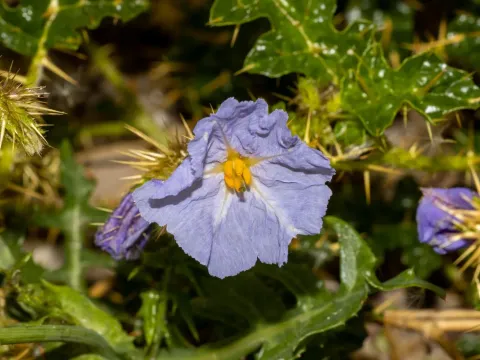
Porcupine nightshade
Solanum hystrix
Porcupine nightshade (Solanum hystrix) is a herbaceous perennial belonging to the Solanaceae family, native to the arid regions of Western Australia. This plant is scientifically recognized for its extreme tolerance to drought and high-temperature environments, making it a subject of specialized agronomic interest.
What the section contains
Porcupine nightshade
The morphology of the plant includes dense, sharp spines that cover the stems and leaves, providing a robust defense mechanism against herbivores. The root system is highly efficient, designed to mine deep soil layers for moisture, which is a critical adaptation for survival in desert-like conditions.
Optimal growth requires well-drained, sandy soils with excellent aeration. Poorly drained substrates or those prone to compaction are unsuitable, as they inhibit root respiration and increase the risk of decay in the root crown, which is typical for this species.
Climate requirements focus on high solar radiation and low relative humidity levels. Solanum hystrix thrives when day temperatures range between 25°C and 35°C, and it is highly susceptible to chilling injury if exposed to temperatures below 10°C for extended periods.
Agrotechnical practices involve minimal soil disturbance to preserve the structural integrity of the root zone. Due to the physical characteristics of the plant, cultivation necessitates mechanical equipment that can handle spiny biomass while performing necessary weeding or fertilization tasks.
The primary pathological threats to the crop include late blight and early blight caused by various Phytophthora and Alternaria species. These fungal pathogens spread rapidly in conditions of high humidity, which must be strictly avoided during the vegetative growth phase.
Pest pressures are predominantly caused by aphids, spider mites, and the Colorado potato beetle, which target the soft tissue of the foliage. Given the dense spines, applying protective measures is complex and usually requires systemic pesticide applications rather than manual intervention.
Soil-borne nematodes pose a secondary but significant threat, often leading to stunted growth and reduced nutrient uptake. Implementing rigorous crop rotation cycles with non-host species is essential for breaking the life cycle of these persistent soil pests.
Viruses transmitted by insect vectors can cause systemic infections that are impossible to treat once established. Therefore, controlling insect populations early in the season is a fundamental aspect of maintaining a healthy and productive stand of Solanum hystrix.
Sanitation of the field, including the removal of infected plant debris post-harvest, is mandatory to prevent the overwintering of pathogens. Proactive monitoring and the use of certified seed stock are the most effective strategies for long-term successful management of this crop.