
Solanum berthaultii
Solanum berthaultii
Solanum berthaultii is a wild tuber-bearing species within the Solanaceae family that is primarily propagated by seeds to maintain genetic diversity in research environments.
What the section contains
Solanum berthaultii
In breeding programs, seeds are sown in sterilized potting mixes under controlled greenhouse conditions to ensure optimal germination and seedling vigor.
Sowing typically occurs in late winter to early spring to align with increasing day length, which is crucial for the healthy vegetative growth of this species.
Proper depth of sowing is essential, usually no more than 0.5 centimeters, to allow the delicate seedlings to emerge without expending excessive energy reserves.
Uniform moisture levels must be maintained during the germination phase to ensure consistent development across the experimental plant population.
Native to the high-altitude regions of Bolivia and Argentina, Solanum berthaultii requires a specific climate characterized by cool days and even cooler nights.
The preferred soil type is light, well-draining, and rich in organic matter, as the plant is highly sensitive to hypoxia caused by waterlogged or compacted soils.
Adequate ventilation is a strict requirement, as this species prefers constant air circulation to prevent the buildup of excess humidity around its glandular foliage.
Light intensity plays a significant role in the plant's development; excessive shading can lead to thin stems and reduced production of protective glandular exudates.
Fertilization should be managed carefully, with balanced NPK levels to avoid excessive vegetative growth at the expense of root and tuber formation.
The most notable feature of Solanum berthaultii is the presence of glandular trichomes on its leaves that secrete a sticky substance trapping aphids and other pests.
This biological resistance mechanism is highly valued by breeders, as it provides a natural defensive barrier against common potato threats like the Colorado potato beetle.
Despite its pest resistance, the species is susceptible to various fungal pathogens, including late blight (Phytophthora infestans), if humidity levels are not controlled.
Viral infections can also pose a significant threat to experimental collections, necessitating the use of strictly isolated growing chambers and pest-proof netting.
Careful monitoring is required to detect early signs of stress or pathogen attack, ensuring that the genetic integrity of the wild plant population is preserved.
Harvesting of experimental tubers is conducted manually once the foliage has begun to naturally senesce, typically toward the end of the growing season.
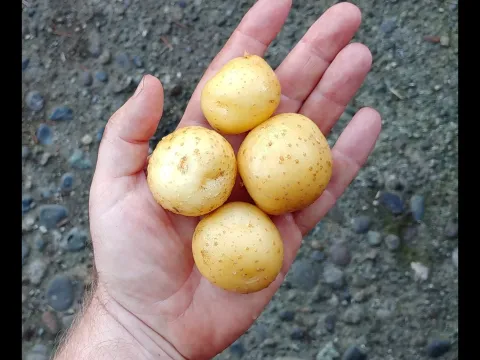
Great care must be taken during the digging process to avoid damaging the small, often irregular tubers that are characteristic of this wild species.
Post-harvest, the tubers are cleaned and stored in cool, dark conditions to maintain dormancy until the next planting cycle or further genetic testing.
Quality control during harvest involves verifying that the harvested material matches the parent plant profile to ensure there was no cross-pollination in the field.
Cleaned materials are indexed and cataloged, forming an important part of the germplasm bank for future agricultural research and crop improvement projects.