
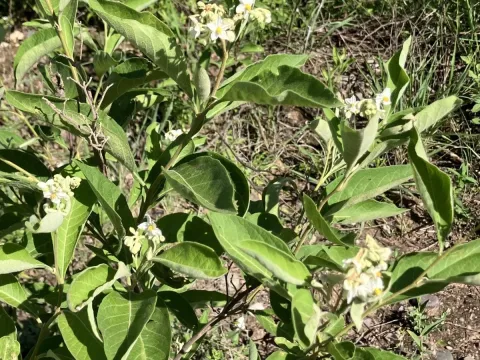
Solanum argentinum
Solanum argentinum
Sowing Solanum argentinum in temperate regions is best performed in a controlled greenhouse environment. For successful germination, the substrate temperature must be maintained between 20–25 degrees Celsius.
What the section contains
Solanum argentinum
Pre-sowing seed preparation includes disinfection and soaking in growth stimulants. Seeds should be sown at a depth of no more than 0.5–1 centimeter to ensure optimal emergence rates.
Seedling transplanting occurs at the two-leaf stage. Adequate lighting is crucial; insufficient light leads to spindly seedlings, which negatively affects survival rates after field transplanting.
Hardened seedlings should be planted in their permanent location only after the danger of night frosts has completely passed. The soil must be well-warmed and prepared with organic matter in the previous autumn.
Plant density typically ranges from 3–4 plants per square meter, depending on the pruning method, to ensure proper air circulation and sunlight penetration.
As a member of the Solanaceae family, Solanum argentinum has high light requirements. The plant thrives in well-warmed areas protected from strong, drying winds.
The crop is somewhat demanding regarding soil conditions. Light loamy or sandy loam soils that are rich in humus and have a neutral or slightly acidic pH are considered optimal.
While the plant shows moderate drought tolerance, regular irrigation is necessary for high-quality production. Excessive soil moisture, however, can lead to root system decay.
During active vegetative development, the crop requires balanced mineral fertilization with a focus on potassium and phosphorus to strengthen stems and support fruit development.
The temperature optimum for growth lies between 18 and 28 degrees Celsius. Significant temperature fluctuations can lead to blossom drop or stunted growth rates.
Like many other Solanaceae species, Solanum argentinum is susceptible to late blight during high-humidity periods. Preventive treatment with biofungicides is highly recommended.
Insect pests such as the Colorado potato beetle and various aphid species pose the greatest threat to this crop. Regular inspection of the underside of leaves is essential for early detection.
Spider mites frequently attack the crop in greenhouse conditions with low humidity. Controlling them involves using acaricides and maintaining an optimal microclimate.
Viral diseases, such as mosaic, can be transmitted by insect vectors. Maintaining strict phytosanitary standards and managing weed populations around the crop is critical.
Root rots may occur due to improper watering regimes or soil compaction. Practicing crop rotation is a mandatory requirement to prevent the accumulation of soil-borne pathogens.