
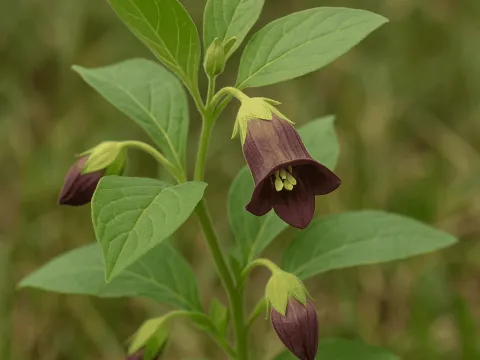
Atropa acuminata
Atropa acuminata
Atropa acuminata is a perennial herb belonging to the Solanaceae family, known for its significant medicinal properties. Its cultivation requires specific conditions to ensure high alkaloid content.
What the section contains
Atropa acuminata
The plant is typically propagated from seeds. Seeds have a low natural germination rate and require a period of cold stratification before sowing to break dormancy.
Sowing is performed in nursery beds or greenhouses. The seeds are placed in a light, well-drained substrate, covered with a thin layer of fine soil, and kept moist.
Seedlings develop slowly during the first few months. They should be protected from direct sunlight and kept at moderate temperatures until they reach a sufficient size for transplanting.
Transplanting into the field takes place in late spring after the risk of frost has passed, ensuring sufficient space between plants for healthy development and air circulation.
Atropa acuminata thrives in fertile, deep, and well-drained loamy soils. It is highly sensitive to waterlogging, which often leads to root rot and other fungal diseases.
The plant prefers sites with high humidity and moderate temperatures. In regions with very hot summers, partial shade is beneficial to prevent leaf dehydration and scorch.
Adequate nutrient supply is essential, especially nitrogen, phosphorus, and potassium, but fertilization must be carefully managed to avoid excessive vegetative growth at the expense of alkaloid content.
The soil should have a neutral or slightly acidic pH. Regular weeding is crucial during the plant's growth phase to eliminate competition for light and soil nutrients.
Wind protection is recommended, as the plant can be brittle and susceptible to damage from strong gusts, especially during the flowering and fruit-bearing stages.
The economic value of Atropa acuminata lies in the extraction of tropane alkaloids used in the pharmaceutical industry. Both leaves and roots are harvested for processing.
Yields increase significantly as the plant matures. A typical plantation reaches its maximum productive capacity by the second or third year of growth.
Precise timing of harvesting is vital. Alkaloid levels vary throughout the day and the growing season, requiring careful management to optimize the concentration of active ingredients.
Post-harvest processing includes rapid drying of the plant material. Proper ventilation and temperature control in drying units are essential to prevent the degradation of alkaloids.
The yield of dried material per hectare is influenced by soil quality, plant density, and the implementation of appropriate pest control measures during the growing season.
Atropa acuminata is susceptible to various pests and diseases that can significantly reduce output. Common threats include root pathogens and leaf-eating insects.
Fungal diseases like powdery mildew and root rot are prevalent in poorly drained soils or conditions with excessive moisture and poor air circulation.
Pest management often involves the use of environmentally friendly biological agents. Chemical pesticides should be used with caution to ensure the safety of the medicinal end-product.
Crop rotation is a fundamental practice. It is highly advised not to plant Atropa on plots previously occupied by other Solanaceae members to prevent the buildup of soil-borne diseases.
Regular monitoring of the foliage and root zones allows for early detection of potential outbreaks, enabling timely interventions before the crop damage becomes widespread.
Leaves are harvested multiple times during the growing season, starting from the budding stage. Clean, dry weather is essential to maintain the quality of the harvested leaves.
Roots are typically harvested at the end of the third growing season. They are extracted, washed thoroughly to remove soil particles, and sliced before being sent for drying.
Immediate processing after harvesting is critical. If left in heaps, the plant material generates heat, which leads to biochemical changes that reduce the potency of the alkaloids.
Drying is conducted in controlled environments at temperatures ranging between 40 and 50 degrees Celsius to ensure maximum preservation of pharmaceutical constituents.
Final storage of the dried product must be in sealed, light-protected containers to ensure the stability of active compounds before they reach the pharmaceutical manufacturing facility.