
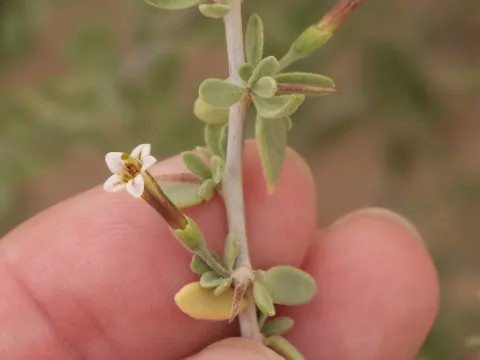
Lycium shawii
Lycium shawii
Lycium shawii, commonly known as Shaw's boxthorn, is a perennial shrub belonging to the Solanaceae family. It is natively adapted to the harsh, arid environments of North Africa, the Middle East, and parts of Western Asia.
What the section contains
Lycium shawii
The plant is highly drought-tolerant and thrives in sandy or rocky soils with low fertility. It requires full sunlight exposure to maintain its dense structure and produce high-quality berries, making it an excellent candidate for semi-arid land reclamation.
Botanically, it is characterized by rigid, thorny branches that provide protection against grazing animals. Its small, leather-like leaves are an evolutionary adaptation designed to reduce moisture loss in extreme heat conditions.
Lycium shawii exhibits strong resistance to soil salinity, allowing it to grow in areas where other agricultural crops would fail. The root system is deep and expansive, efficiently tapping into subterranean water sources.
In agricultural settings, the plant serves as a vital tool for wind erosion control and as a living fence. It creates a microhabitat that supports biodiversity and helps in stabilizing the soil surface against wind and water impact.
The fruit of Lycium shawii is a small, orange-to-red berry known for its nutritional value. In its native range, the harvest is gathered manually, often over several weeks due to the asynchronous ripening of the fruits.
To optimize yields in cultivated environments, irrigation should be limited to critical growth stages, such as the period following initial spring growth and during berry development, to ensure consistent fruit size and quality.
Post-harvest, the berries are typically sun-dried to concentrate their sugars and nutrients. This traditional processing method ensures the product can be stored for long periods, providing a reliable source of vitamins and minerals.
Besides the berries, the foliage and young branches are sometimes utilized as supplementary livestock fodder during seasons of extreme drought when traditional grazing lands are depleted.
Sustainable yield management involves periodic pruning of the shrubs. This practice not only improves the accessibility of the fruit for harvest but also promotes the growth of new, vigorous stems that carry the highest berry production potential.
The primary threats to Lycium shawii include fungal diseases that can manifest if the plants are exposed to high humidity or poor soil drainage. Maintaining dry, well-aerated conditions around the root collar is essential for plant health.
Common insect pests like aphids and spider mites may target young leaves and tender shoots during the spring. Monitoring is key, and integrated pest management (IPM) should be applied to prevent widespread damage.
Root rot is a significant risk in poorly drained sites. To prevent this, planting on raised beds or sloped areas is highly recommended to encourage drainage and prevent water accumulation near the base of the shrub.
Mechanical damage to the plant's woody tissue caused by livestock or machinery can provide entry points for pathogens. Protecting the young plants with temporary fencing is advisable until they establish a strong, protective thorny canopy.
While the species is hardy, severe frost in certain regions can damage new growth. In areas where the climate is borderline, selecting sites with good air circulation and solar heat retention during the day can help mitigate cold damage.