
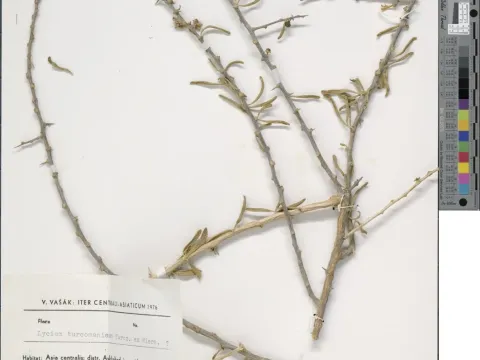
Lycium turcomanicum
Lycium turcomanicum
Lycium turcomanicum is a hardy perennial shrub belonging to the Solanaceae family. It is recognized for its highly adaptive nature and significant role in the flora of arid and semi-arid landscapes of Central Asia.
What the section contains
Lycium turcomanicum
Native to the harsh desert regions of Turkmenistan, this plant thrives in environments characterized by extreme temperature fluctuations and minimal rainfall. It is a classic example of a xerophytic species adapted to saline and poor soils.
The botanical profile of the plant includes thorny, densely branched stems and a deep, extensive root system. This morphology allows the shrub to anchor itself effectively in loose sandy substrates and access deep groundwater.
Regarding climate requirements, the plant demands high levels of solar radiation and is sensitive to excessive atmospheric moisture. It exhibits a remarkable physiological tolerance to high salinity, making it a candidate for reclaiming degraded saline lands.
Cultivation practices for this species are relatively simple, focusing primarily on habitat protection. It is a slow-growing plant that requires minimal chemical or mechanical intervention when established in its native range.
The economic value of Lycium turcomanicum lies primarily in its utility as a forage crop for livestock, particularly in desert grazing systems. It provides essential nutrients to camels and sheep during seasons when herbaceous vegetation is unavailable.
The fruit of the plant is considered a significant resource in ethnomedicine and has potential for pharmaceutical exploitation due to its secondary metabolite content. Research indicates the presence of various bioactive compounds.
Environmentally, the shrub is an essential agent for sand fixation and soil erosion control. By stabilizing dunes, it facilitates the recovery of secondary vegetation and improves the overall quality of local ecosystems.
Productivity in terms of biomass and fruit yield varies based on climatic conditions and density of the plant stands. Efficient management of grazing pastures ensures the sustainability of these biological resources.
Future agricultural applications may include domesticating the species for medicinal extract production, provided that wild-harvesting practices remain sustainable and ecological preservation is prioritized.
Common threats to this species include damage from specific agricultural pests such as spider mites and aphids, which may stress the plants. However, natural resistance mechanisms usually keep these populations in check.
Fungal diseases are generally rare in the arid conditions where the plant naturally occurs. Potential issues with fungal pathogens typically arise only under poor drainage conditions in artificial cultivation setups.
The most significant threat to the survival and spread of the species is human-induced habitat degradation, specifically overgrazing. Excessive pressure from livestock limits recruitment and prevents the maturation of young specimens.
Conservation strategies should prioritize the establishment of protected grazing areas to allow for natural regeneration. Effective monitoring of population density is vital for maintaining the health of the species.
Management of the species does not typically involve intensive pesticide application. Integrated management protocols, focusing on minimizing anthropogenic impact, are the most recommended approach for protecting the shrub.