
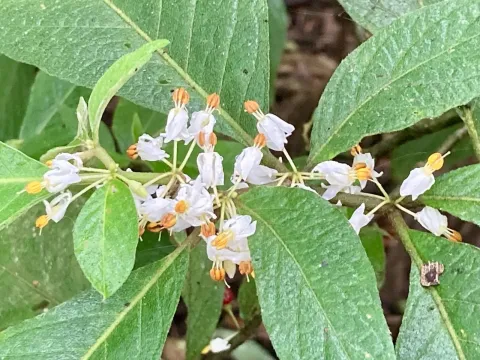
Lycianthes radiata
Lycianthes radiata
Lycianthes radiata is a perennial herb or subshrub belonging to the Solanaceae family. As a member of this diverse family, it shares specific morphological and physiological traits with its relatives, requiring careful attention to its growing conditions to thrive.
What the section contains
Lycianthes radiata
Native to tropical environments, this plant demands high temperatures and moderate-to-high humidity levels to sustain its growth cycle. It is sensitive to extreme weather fluctuations and thrives best in stable environments, such as greenhouses or tropical zones.
The substrate for Lycianthes radiata must be well-drained and nutrient-rich. It performs best in soils with high organic matter content. Proper drainage is the most critical factor, as stagnant water is detrimental to its root system and leads to rapid deterioration of the plant's health.
Lighting requirements are significant for this species. While it appreciates bright light, intense midday sun can cause dehydration and leaf scorching. Therefore, providing filtered or partial shade during peak sun hours is recommended for optimal vegetative development.
Agronomic management involves periodic fertilization using balanced NPK solutions during the growing season. Pruning is also essential to maintain the structural integrity of the plant and to encourage the development of lateral shoots, which improves the overall health and ornamental or harvest potential.
The primary threats to Lycianthes radiata include fungal infections, particularly those caused by soil-borne pathogens like Pythium or Phytophthora species. These infections are usually exacerbated by improper watering schedules and poor ventilation within the growing space.
Pest pressure is mainly attributed to sap-sucking insects such as aphids, whiteflies, and spider mites. These pests not only weaken the plant by extracting fluids but can also serve as vectors for various viral diseases common to the Solanaceae family, requiring consistent monitoring.