
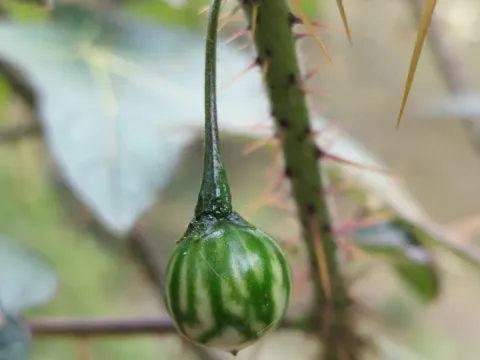
Maple-leaf nightshade
Solanum acerifolium
Maple-leaf nightshade (Solanum acerifolium) is a botanical species belonging to the Solanaceae family. Originating from South America, particularly within the Andean regions, it has developed unique morphological traits that distinguish it from other members of the extensive Solanum genus.
What the section contains
Maple-leaf nightshade
The plant is defined by its distinct maple-shaped leaves, which provide it with a high ornamental value alongside its agricultural significance. The stems are typically prickly, acting as a defensive adaptation common in wild nightshades to protect them from herbivorous pressure in their native ecosystems.
For successful cultivation, the species requires fertile, well-drained soils with a balanced pH level. Ensuring proper aeration of the root zone is critical; therefore, adding organic amendments to heavy clay soils is recommended to prevent waterlogging and root rot issues that can quickly impact the plant's health.
Climate requirements for this plant are centered around warmth and consistent ambient humidity. It flourishes in tropical to subtropical conditions and is highly intolerant of frost. Exposure to cold temperatures typically triggers dormancy or causes severe tissue damage to the tender stems and foliage.
Management techniques involve regular but careful irrigation to keep the substrate moist but not saturated. Because of its light requirements, it is best to place or plant this species in areas that receive bright, filtered sunlight to ensure optimal photosynthetic activity and sustained vegetative growth throughout the season.
The plant is susceptible to common Solanaceae pathogens, including late blight and fungal wilts. Prevention is the key strategy: maintaining spacing between plants ensures good air circulation, which significantly lowers the risk of fungal proliferation and leaf spot diseases.
Pest management focuses on monitoring for aphids, spider mites, and the Colorado potato beetle. Integrated pest management, including the use of soaps or neem-based treatments, is often employed to mitigate damage while maintaining the plant's structural integrity during the growing cycle.