
Mandragora officinarum
Mandragora officinarum L.
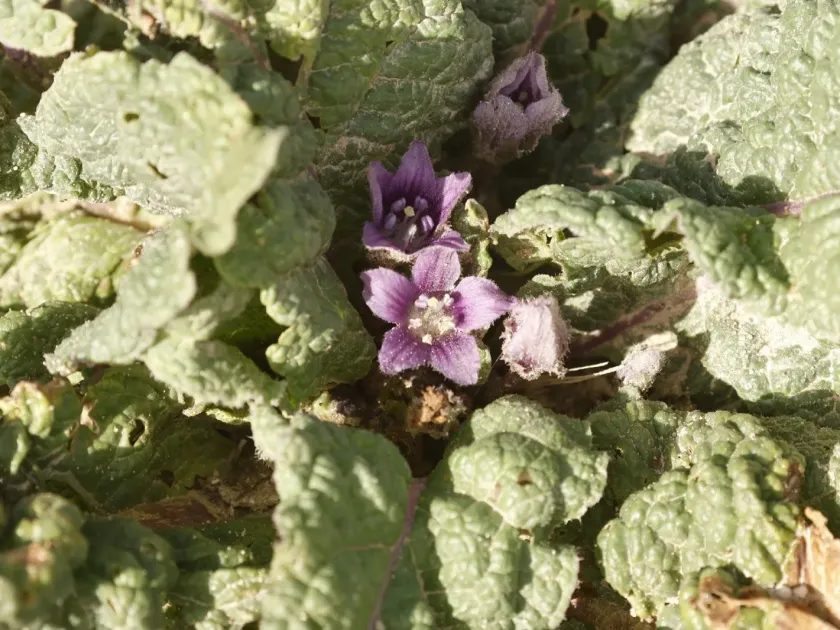
Description
Sowing dates
The sowing of Mandragora officinarum is best performed in the autumn or early spring, following a mandatory stratification period for the seeds. Germination is characteristically slow and irregular.
Seeds should be planted in a loose, well-draining substrate at a depth of 1-2 centimeters. Covering the containers helps to maintain the high humidity levels required for sprouting.
In a commercial setting, it is advisable to grow seedlings in individual pots, as the plant develops a deep taproot that suffers from transplanting shock.
Seedlings should be gradually exposed to open-air conditions once the first true leaves have developed. Maintaining temperatures between 18 and 22 degrees Celsius supports uniform early growth.
As a member of the Solanaceae family, the mandrake plant requires sufficient space between individual plants to accommodate its expansive rosette foliage during its long life cycle.
Growing requirements
Mandragora requires well-drained, deep, and sandy soil to thrive. Waterlogging is detrimental, often leading to rapid root rot, which is the primary cause of crop failure.
Sunlight exposure is crucial for the development of secondary metabolites. The site chosen for cultivation should be open and protected from strong, drying winds.
The plant is thermophilic, meaning it requires warm temperatures for vegetation, typically ranging from 20 to 25 degrees Celsius. Protection from hard frosts is necessary in temperate climates.
A neutral to slightly alkaline soil pH is optimal. Moderate organic fertilization helps sustain plant vigor without promoting excessive vegetative growth at the expense of root development.
Controlled irrigation is vital; the soil should remain moist but never waterlogged. Monitoring the moisture level at the crown of the plant is particularly important.
Main diseases and pests
Slugs and snails represent the primary pests for Mandragora, often feeding on the succulent leaves. Aphids may also present a challenge during the peak of the growing season.
Fungal diseases, including root rot and powdery mildew, are the main threats in high-humidity conditions. Ensuring proper airflow around the base of the plant is an effective control measure.
Soil-borne pathogens can be mitigated through rigorous crop rotation and the use of sterile growing media for young seedlings.
Chemical intervention should be strictly limited, as the root is used for pharmacological purposes, and residue management is critical for quality control.
Cultural practices such as weed management and regular hoeing improve aeration and reduce the micro-environment favorable to pests and pathogens.
Harvesting
The primary agricultural interest in Mandragora lies in its roots, which are harvested for their alkaloid content. Harvest should only occur when plants reach 3 to 4 years of age.
The roots are harvested at the end of the growing season when the foliage naturally begins to wither. Care must be taken to remove the entire root structure without fragmentation.
Once harvested, roots are washed to remove debris. Large roots are often sliced longitudinally to facilitate consistent and efficient drying.
Drying is conducted at controlled temperatures, not exceeding 45 degrees Celsius, to prevent the breakdown of thermolabile alkaloids.
The dried product must be stored in airtight, dark containers in a cool environment to maintain the stability and potency of its bioactive compounds.