
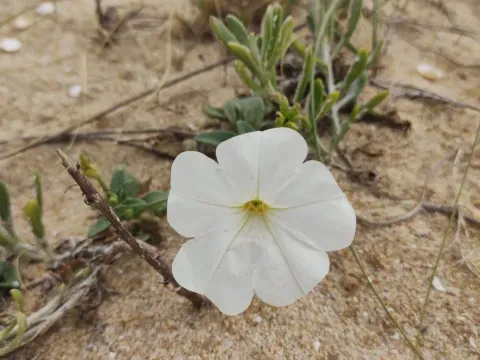
Petunia
Petunia
Petunia (Petunia) is a genus of flowering plants in the family Solanaceae. It is widely cultivated as an ornamental annual crop in various regions around the world.
What the section contains
 Petunia floribunda
Petunia floribunda
Petunia floribunda
 Petunia grandiflora
Petunia grandiflora
Petunia grandiflora
 Petunia hybrids
Petunia hybrids
Petunia hybrids
 Petunia linoides
Petunia linoides
Petunia linoides
 Petunia milliflora
Petunia milliflora
Petunia milliflora
 Petunia multiflora
Petunia multiflora
Petunia multiflora
 Petunia pendula
Petunia sellowiana
Petunia sellowiana
Petunia pendula
Petunia pendula
Petunia sellowiana
Petunia sellowiana
 Petunia Surfinia
Petunia surfinia
Petunia Surfinia
Petunia surfinia
Petunia
Propagation is primarily done via seeds, which are sown indoors 8 to 12 weeks before the last expected frost to ensure strong transplants for the growing season.
The seeds are extremely small and require light to germinate, so they should be sown on the surface of moist, well-drained growing medium without covering them.
Maintenance of high humidity and temperatures between 22°C and 25°C is crucial during the germination phase to ensure a high percentage of successful sprouting.
Once seedlings have developed two sets of true leaves, they are pricked out and transplanted into individual cells to encourage robust root system development before final planting.
Petunias require full sun to thrive and produce their signature profuse blooms. Locations with at least 6 hours of direct sunlight per day are ideal for optimal plant health.
Soil requirements include high fertility and excellent drainage. Container-grown petunias benefit from high-quality peat-based potting mixes with added perlite for aeration.
The plants are moderate feeders and require consistent fertilization throughout the growth cycle to sustain continuous flowering and prevent nutrient deficiencies.
Regular watering is essential, especially for container-grown plants, but the root zone must not be kept constantly soggy, as this promotes root rot diseases.
Temperature management is critical; petunias are cold-sensitive and should not be exposed to temperatures below 5°C, as this can severely check their growth.
Powdery mildew is a common fungal disease that affects petunias, appearing as a white, dusty layer on the foliage, typically during periods of high humidity and poor air circulation.
Botrytis blight (gray mold) can occur in densely planted areas or greenhouses where moisture levels are high, damaging flowers and leaves with necrotic spots.
Aphids are frequent pests that feed on the soft tissue of new shoots and buds, often leading to stunted plant growth and the transmission of various mosaic viruses.
Spider mites often attack petunias in dry, hot weather, causing yellowing and stippling on leaves as they suck plant sap from the underside of the foliage.
Effective management involves maintaining proper spacing, ensuring adequate ventilation, and applying appropriate fungicidal or insecticidal treatments when symptoms are first observed.