
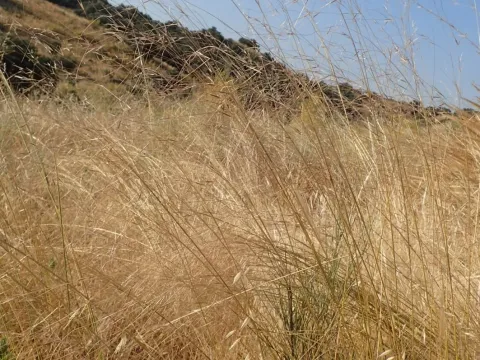
Lagasca's needle grass
Stipa lagascae
Lagasca's needle grass (Stipa lagascae) is a perennial grass species belonging to the Poaceae family. It is native to the arid regions of the Mediterranean, primarily found in rocky landscapes and dry steppes of the Iberian Peninsula.
What the section contains
Lagasca's needle grass
The species is perfectly adapted to climates with long, hot summers and mild, wet winters. It thrives in well-drained, nutrient-poor, and often calcareous soils, showing extreme resilience against prolonged drought conditions.
Botanically, the plant forms dense tufts with elongated, feathery awns typical of the genus. These structures facilitate the seed dispersal process via wind, ensuring the survival of the species in harsh, open terrains.
In terms of agricultural utility, it is primarily valued for land restoration and erosion control on steep or stony sites where common agricultural crops would fail to establish.
Cultivation requires minimal intervention. Once the root system is established, the plant requires no irrigation, making it a sustainable choice for xeriscaping and ecological stabilization projects.
The primary threat to the health of Stipa lagascae is waterlogging. Poorly drained soils can trigger root rot and crown rot, which are often fatal to this drought-adapted species.
Fungal diseases, such as leaf rust and powdery mildew, may occur during periods of high humidity or poor air circulation, particularly if plants are grown in overcrowded conditions.
Insect pests include aphids and certain types of grass-feeding beetles that target the foliage and the base of the stems, causing significant damage during the early stages of growth.
Weed competition is a significant threat during the seedling stage. Young plants grow slowly and can be easily outcompeted by aggressive invasive weeds if the site is not properly prepared.
Maintenance to reduce these threats involves careful site selection, avoiding excess nitrogen fertilization, and ensuring enough space between individual plants to promote airflow.