
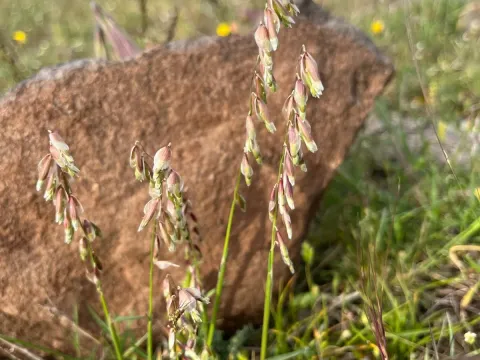
Large melic grass
Melica macra
Large melic grass (Melica macra) is a perennial grass belonging to the Poaceae family. It is recognized for its robust rhizome system and its ability to establish firm turf, making it a highly effective plant for ecological restoration and soil stabilization projects.
What the section contains
Large melic grass
The native distribution of this species spans the steppe and forest-steppe zones of Eurasia. It thrives in environments with high solar radiation and is specifically adapted to dry, well-drained habitats, including rocky slopes and open meadows where competitive pressure from other dense grasses is limited.
Agronomic requirements for Melica macra include well-structured, non-compacted soils. The species is notably drought-tolerant once established, but optimal productivity is achieved in soils with neutral to slightly alkaline pH levels and adequate drainage to prevent root asphyxiation during the wet season.
Cultivation practices involve proper seedbed preparation and ensuring that planting depth is consistent to encourage uniform germination. Because it is a slow-growing perennial in its early stages, it requires weed control during the establishment year to ensure long-term stand density and vitality.
The agricultural usage of this grass is primarily focused on forage production in marginal lands. Due to its nutritional profile, it is frequently utilized in pasture improvement programs to provide high-quality grazing material for livestock during periods when other grasses might suffer from seasonal drought.
The main pathological threats to large melic grass involve fungal infections such as rusts (Puccinia spp.), which can significantly impact the photosynthetic capacity of the plants. Good air circulation within the canopy is essential to mitigate the risk of these diseases.
In terms of insect pests, the grass is susceptible to aphids and various grass-feeding moths. Integrated pest management strategies, including the removal of debris and maintaining diverse surrounding vegetation, are recommended to sustain the health of the crop without relying exclusively on chemical interventions.