
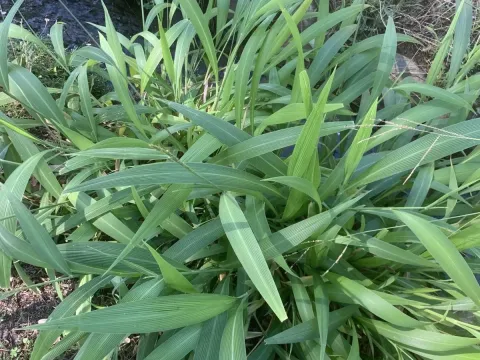
Large-leaved bristlegrass
Setaria megaphylla
Large-leaved bristlegrass (Setaria megaphylla) is a perennial herbaceous plant belonging to the Poaceae family. In tropical and subtropical climates, where the crop shows maximum productivity, sowing is carried out at the beginning of the rainy season when the soil is warm and sufficiently moist for rapid seed germination.
What the section contains
Large-leaved bristlegrass
The optimal time for sowing is when ambient temperatures remain consistently above 20°C. In regions with a warm season, oversowing on pastures or establishing seed production plots in spring is possible, ensuring robust root system development before the peak heat of summer.
The plant exhibits high growth energy during the initial stages, allowing it to compete successfully with weeds. When preparing the soil, it is essential to ensure a fine-textured structure for uniform seed distribution and proper soil-seed contact, which is critical for the small seeds of bristlegrass.
The seeding rate is calculated based on the intended use—higher for green fodder production and lower for seed production. Sowing is best performed in rows with inter-row spacing that facilitates maintenance and fertilizer application, which are necessary for the development of the foliage rosette.
The planting depth should not exceed 1–2 centimeters, as the small seeds may fail to emerge through a thick layer of soil. Following sowing, rolling the field is highly recommended to compact the soil and improve capillary moisture supply to the seeds.
This species requires open, sunny areas as it is a light-loving plant. In shaded conditions, growth slows down, and the nutritional value of the green mass decreases; therefore, it is not recommended to sow the crop under tree canopies or in dense forests.
Large-leaved bristlegrass prefers fertile, well-drained soils with a neutral or slightly acidic pH. It can tolerate short-term waterlogging, but stagnant water in the root zone over prolonged periods negatively impacts yields and can lead to root rot.
The plant responds well to nitrogen fertilization, which stimulates intensive vegetative growth. Regular feeding is necessary under an intensive management system, especially if the grass is harvested multiple times per season, as this depletes soil nutrient reserves.
Climatic preferences are limited to tropical and subtropical regions where the crop is most productive. It is highly sensitive to freezing temperatures and will perish during frost; therefore, cultivation in temperate climates is limited to an annual cycle or greenhouse production.
In regions with dry spells, the crop requires additional irrigation, as the large leaf area contributes to rapid moisture loss. With sufficient water availability, bristlegrass is capable of providing several high-quality green fodder cuts per year.
The agricultural use of large-leaved bristlegrass is primarily aimed at producing succulent green fodder for cattle and other farm animals. The crop is notable for its significant biomass, making it a promising fodder source in warm climates.
The nutritional value of the plant is highest during the tillering and jointing phases. During this period, protein and sugar content reach optimal levels, allowing it to be used as a dietary staple to support high productivity in livestock farming.
Depending on management intensity and climatic conditions, green mass yields can be substantial. With proper fertilization and irrigation regimes, the plots can yield 3–5 full cuts within a single growing season.
In addition to mechanical harvesting, controlled grazing on bristlegrass plots is possible, though strict rotation is required to prevent overgrazing and damage to growth points. The crop recovers well after grazing, which helps maintain pasture productivity over long periods.
Plant seeds are also of interest for breeding and developing new varieties adapted to specific regional conditions. Seed yields depend on harvest timing and preventing premature shattering, which is a common characteristic of species in this genus.
Typical diseases for this crop include fungal infections such as rust and leaf spots. These develop actively under conditions of high humidity and poor air circulation within the canopy, reducing both fodder quality and total yield.
Among pests, sucking insects such as aphids and leafhoppers are the most dangerous, as they can transmit viral grass diseases. Damage caused by pests makes the plant susceptible to secondary infections, making regular phytosanitary monitoring an essential element of agronomy.
Weed control during the early development stages is crucial, as the crop grows relatively slowly when it first emerges. Herbicide use must be strictly regulated to ensure no negative impact on the growth of the forage crop itself.
To prevent the spread of pathogens, it is recommended to practice crop rotation and avoid monoculture on the same plot for many years. Intercropping with legumes helps not only reduce the infection load but also improves soil fertility.
If disease foci are detected, immediate mowing of the affected mass followed by its removal from the field or proper disposal is necessary. This helps prevent the spread of fungal spores to healthy sections of the field and minimizes harvest losses.
Harvesting for green fodder is performed during the phase of intensive growth before flowering begins, to preserve the maximum nutritional quality of stems and leaves. Letting the crop mature too long leads to stem lignification, which significantly reduces palatability for livestock.
For hay production, mower-conditioners are used, which accelerate the dehydration process by damaging the stem epidermis. Properly prepared bristlegrass hay has a pleasant aroma and a high fiber content, which is essential for the digestion of ruminants.
In large-scale operations, silaging is practiced, allowing nutrient retention for extended periods. Silage made from this species has high energy value and is well consumed by livestock during winter months, substituting fresh grass.
Harvesting for seeds is conducted at the moment of full physiological maturity when the panicles take on a characteristic color. It is vital to complete the work before mass shattering occurs, as bristlegrass seeds detach easily from the spikelets upon the slightest mechanical impact or strong wind.
Post-harvest treatment of seed material includes thorough cleaning of impurities and drying to standard moisture levels. Storage should take place in dry, cool, and well-ventilated facilities to maintain high germination energy for the following season.