
Kurdistan feather grass
Stipa kurdistanica
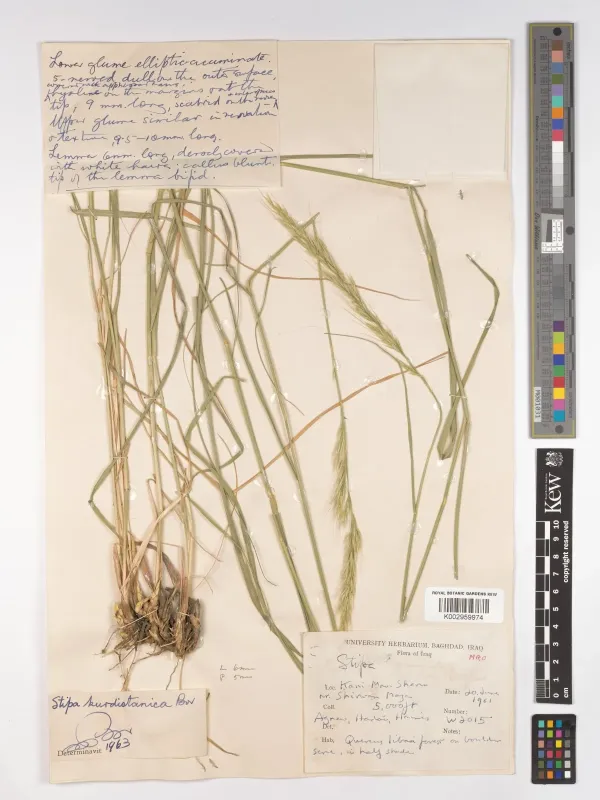
Description
Growing requirements
Kurdistan feather grass (Stipa kurdistanica) is a perennial grass species belonging to the Poaceae family. It is a highly specialized plant characterized by its dense, tufted growth habit and exceptional tolerance to xeric environments.
The species originates from the mountainous regions of the Middle East. It has adapted to thrive in harsh, rocky landscapes where soil moisture levels are frequently low and temperatures fluctuate significantly throughout the year.
For successful growth, this grass requires well-drained soil with a mineral-rich composition. It is particularly well-suited to stony substrates that prevent the roots from remaining in contact with standing water, which could lead to decay.
Sunlight is the primary factor driving the development of Stipa kurdistanica. The plant performs best in full-exposure settings where it can accumulate heat units effectively during the growing season without competition from taller vegetation.
Regarding agrotechnology, the species is relatively low-maintenance. It does not require frequent fertilization, as excessive nutrient levels often promote weed growth and can compromise the drought-hardy characteristics of the plant.
Main diseases and pests
The primary threats to Stipa kurdistanica are fungal diseases, especially those associated with powdery mildew. These pathogens become active during periods of high humidity and poor ventilation within the crop canopy.
Insect pests, including various species of aphids and grain moths, can damage the foliage and reproductive structures. Integrated pest management strategies are essential to keep populations below economic injury levels.
Root rot represents a significant threat if the cultivation site is poorly drained. Pathogenic fungi in the soil can infect the root system during the dormant season, leading to significant plant mortality.
Seed-borne pathogens are another concern, especially if harvesting occurs during wet conditions. Proper drying and cleaning of seeds are crucial to ensure high germination rates and to prevent infection spread.
Competition from invasive weeds often necessitates mechanical weeding or the use of selective herbicides in the early development stages. Once the plants are well-established, they are generally capable of suppressing most competing weeds.