
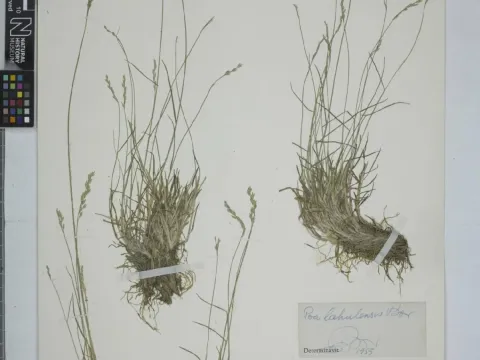
Lahul bluegrass
Poa lahulensis
Lahul bluegrass is a perennial grass species highly adapted to extreme high-altitude conditions. In its natural habitat, seed dispersal and germination occur during the short summer period when temperatures consistently remain above freezing levels.
What the section contains
Lahul bluegrass
In cultivated settings, sowing should ideally be conducted in early spring to utilize available moisture from melting snow. Precise seed placement at a depth of 1–2 centimeters is critical for successful emergence, given the small seed size.
Seedbed preparation requires a fine, firm tilth to ensure good soil-to-seed contact. Since early seedling growth is relatively slow, maintaining a weed-free environment during the first few weeks is essential for crop establishment.
Seeding rates are determined based on seed viability and desired stand density. Row sowing with a spacing of 15–20 centimeters is commonly practiced in nursery conditions to facilitate better management and weed control.
Proper timing of sowing is vital, as the species requires moderate temperatures for optimal germination. Natural re-seeding is a hallmark of this plant, contributing to its long-term survival in mountain ecosystems.
As a member of the Poaceae family, Lahul bluegrass exhibits significant specialization for alpine environments. It is well-equipped to withstand severe temperature fluctuations, including sub-zero temperatures even during the growing season.
Soil requirements involve well-drained, stony, or loamy substrates with neutral to slightly acidic pH levels. Waterlogging is detrimental to the root system, making areas with high water tables unsuitable for cultivation.
This species is highly heliophilous and requires full sun for optimal performance. Shading from taller vegetation or high-density planting can significantly suppress its growth and reproductive capacity.
Mineral nutrition, particularly the availability of nitrogen, is crucial during the active spring regrowth phase. The plant is adapted to nutrient-poor soils and often benefits from symbiotic relationships with soil microorganisms.
Climate adaptation focuses on completing the life cycle within a very short growing season. The plant shows moderate drought tolerance but prefers the consistent moisture regimes associated with mountain meltwater runoff.
The agricultural utility of Lahul bluegrass is primarily concentrated in the improvement and maintenance of high-altitude pastures. The biomass is highly palatable and provides essential nutrients for livestock grazing in mountain terrains.
Forage yield is directly influenced by elevation, soil fertility, and precipitation patterns during the summer months. The stand typically forms a dense, resilient sod that can withstand intensive grazing pressure.
Seed production is generally modest, which historically limited the widespread commercial distribution of the species. Most of the crop value is derived from its vegetative growth, which is rich in protein and essential minerals.
Productive longevity is high, provided that sustainable grazing practices are followed. Overgrazing is a significant risk that can lead to stand degradation, reduced yields, and increased susceptibility to soil erosion on slopes.
Strategic management of grazing intervals ensures optimal biomass accumulation and allows the plants to replenish underground carbohydrate reserves, maintaining long-term productivity and stand health.
Common diseases affecting Lahul bluegrass include various rusts and leaf spot fungi, which thrive in high-humidity conditions. Proper aeration of the canopy is the most effective preventative measure against these infections.
Insect pests, such as cereal flies and certain meadow bugs, may occasionally damage foliage and reproductive organs. Integrated pest management strategies are preferred to maintain the ecological balance of alpine grasslands.
Root damage caused by soil-dwelling larvae can be a localized concern in young stands. Monitoring plant vigor and maintaining optimal soil health are the primary methods for mitigating these risks.
Sanitation practices, such as removing old, accumulated dead plant material, help improve airflow and reduce the incidence of fungal pathogens. This keeps the turf healthy and minimizes the necessity for chemical intervention.
Sustainable grazing intensity is the most effective way to prevent biotic stress, which often precedes disease outbreaks. A balanced approach protects the natural resilience of the grass, ensuring its survival under challenging alpine conditions.