
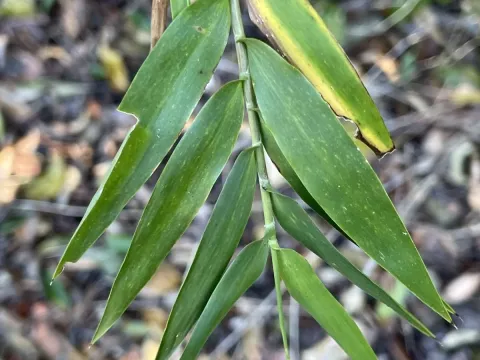
Lasiacis
Lasiacis
Lasiacis is a genus of perennial plants classified within the grass family (Poaceae). These plants are distinguished by their unique growth habit, often resembling bamboo-like shrubs or scrambling vines with woody-like stems that allow them to climb or spread across diverse tropical terrains.
What the section contains


Lasiacis
The native distribution of this genus spans across the Americas, primarily inhabiting tropical and subtropical zones. They are typically found in forest edges, clearings, and disturbed areas, where they benefit from high humidity levels and filtered sunlight characteristic of tropical ecosystems.
Cultivation requires specific climatic conditions, as Lasiacis is strictly non-frost hardy. Optimal development occurs in environments with warm temperatures ranging from 20 to 30 degrees Celsius. Consistent moisture throughout the growing season is essential for maintaining biomass production.
Soil requirements for Lasiacis favor well-drained loamy structures that are rich in organic matter. While the plants are somewhat versatile regarding substrate, they perform best in soils that are slightly acidic to neutral, avoiding waterlogged conditions which may lead to root suffocation.
In terms of agricultural utility, certain species of Lasiacis are utilized in native grazing systems or as ground cover in agroforestry projects. Their botanical resilience and rapid growth make them subjects of interest for ecological restoration and soil stabilization efforts in their natural range.