
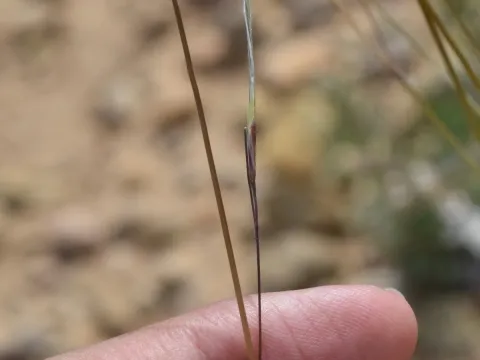
Bearded feather grass
Stipa barbata
Bearded feather grass (Stipa barbata) is a perennial tufted grass belonging to the Poaceae family. It is renowned for its resilience in semi-arid environments and its role in stabilizing fragile landscapes.
What the section contains
Bearded feather grass
Seed sowing is best performed in late autumn to utilize natural winter stratification, or in early spring when soil moisture is at its peak. The seeds have a hard coat that benefits from seasonal fluctuations in temperature.
The seeds should be sown shallowly, ideally at a depth of 1–3 cm. Proper seed-to-soil contact is critical, and light rolling of the field after sowing is recommended to promote germination and prevent erosion of the seedbed.
During the first year of establishment, plants focus their energy on root development rather than vegetative spread. Consequently, growth above ground may appear slow, and weed suppression is necessary during this initial phase.
Planting densities should be adjusted based on the intended land use. For erosion control on steep slopes, denser plantings are preferred to ensure rapid coverage once the root system is fully established.
This species is a quintessential xerophyte, perfectly adapted to dry, sunny, and windy conditions. It thrives in open steppe climates where other forage grasses often fail to survive the summer drought.
It prefers well-drained soils, specifically sandy, rocky, or calcareous substrates. Drainage is the most critical environmental factor; the plant will not tolerate waterlogged conditions or high water tables.
Bearded feather grass requires full sun to maintain its vigor and reproductive capacity. Even partial shade can lead to reduced tillering and may ultimately weaken the stand over time.
Soil fertility requirements are relatively low compared to high-yield agricultural crops. Stipa barbata can extract nutrients from poor soils, making it an excellent candidate for land reclamation and degraded soil restoration.
The species is highly winter-hardy, capable of surviving extreme temperature drops in continental climates. However, it requires protection from ice crusting on the soil surface, which can lead to suffocation of the root crown.
Stipa barbata is generally resistant to many common agricultural pests. However, it can be susceptible to various rust fungi during prolonged periods of high humidity and poor ventilation within the dense tufts.
Insect pests such as grass bugs or aphids may target the developing seed heads. If left unmonitored, these pests can significantly reduce the potential for seed harvest or self-seeding in the following season.
Overgrazing is the primary management-related threat. Intense trampling by livestock can damage the root crown and lead to soil compaction, which hinders the long-term survival of the perennial stand.
Competition from annual weeds is particularly damaging during the first growing season. If weeds are not controlled mechanically, they can quickly outcompete the slow-growing feather grass seedlings for resources.
While the plant is tough, physical mechanical damage to the foliage during the growing season can reduce the overall health and vigor of the tuft, potentially leading to increased vulnerability to secondary infections.