
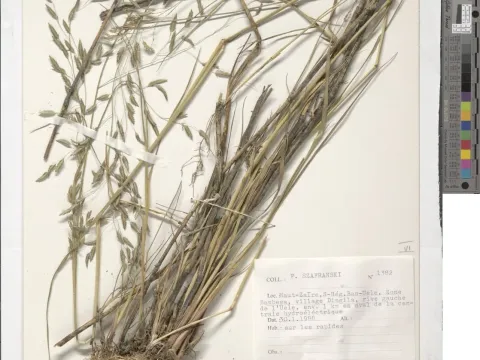
Barter's lovegrass
Eragrostis barteri
Barter's lovegrass (Eragrostis barteri) is a grass species belonging to the Poaceae family. Sowing is typically carried out at the onset of the rainy season, as the seeds require consistent moisture and temperatures above 20°C to achieve optimal germination rates.
What the section contains
Barter's lovegrass
Due to the small size of the seeds, they should be sown at a shallow depth, often broadcast or drilled into a well-prepared seedbed. Firming the soil after sowing ensures the necessary contact between the seeds and the soil particles to promote rapid water absorption.
Field preparation involves clearing debris and weeds, which is crucial for the establishment phase. Since the seedlings grow relatively slowly at first, providing a weed-free environment significantly increases the survival rate of the young plants.
Seeding rates are adjusted based on the intended use; higher densities are used for pastures to create a thick carpet, while lower densities might be sufficient for hay production. Proper spacing helps in managing the nutrient uptake of the plants.
In regions with fluctuating rainfall, supplementary irrigation during the first few weeks after sowing can be the deciding factor for a successful crop. Once the root system is well-established, the plant shows better resilience to moisture fluctuations.
Eragrostis barteri is naturally adapted to tropical and subtropical climates, requiring significant sun exposure for active biomass accumulation. It thrives in open fields where it can maximize its photosynthetic efficiency during the day.
The crop prefers well-drained sandy or sandy-loam soils, which are typical of its native distribution areas. It is sensitive to waterlogging and poor soil aeration, which can lead to root system decay and a significant decline in overall vigor.
Regarding soil fertility, while the plant can tolerate nutrient-poor conditions, it responds positively to balanced fertilization. Nitrogen, in particular, promotes rapid vegetative growth, which is desirable when the primary goal is high forage yield.
Soil pH should ideally be in the neutral to slightly acidic range. The species demonstrates high tolerance to marginal soil conditions, making it an excellent candidate for the reclamation of degraded lands where other forage crops might struggle.
Environmental conditions must be monitored for extreme cold, as the plant is not frost-tolerant. It performs best within a temperature range that supports continuous metabolic activity throughout the growing season.
The primary economic value of Barter's lovegrass lies in its use as a fodder crop. It provides a reliable source of green forage and hay for livestock, especially in semi-arid regions where high-quality grazing resources are scarce.
Yields are maximized by adopting a rotational cutting or grazing schedule. Harvesting the grass just before the onset of the flowering stage ensures the best balance between protein content, digestibility, and overall biomass volume.
After being cut, the grass dries relatively quickly due to its leaf structure and the prevailing high temperatures, which is an advantage for hay production. Proper drying is essential to prevent mold and ensure the nutritional value is preserved for winter storage.
With proper management, the crop can provide multiple harvests per year. Each subsequent cut stimulates the plant's regrowth, provided that soil nutrients are adequately replenished through appropriate fertilization practices.
The nutritional profile of this grass is generally suitable for ruminants, offering sufficient energy and fiber. Its palatability is highest when the plants are young and have not yet developed tough, lignified stems.
Common diseases affecting this crop include various fungal leaf spots that flourish under high humidity and poor airflow. Managing the density of the stand is a preventive strategy to reduce the incidence of these fungal pathogens.
Insect pests such as aphids and various lepidopteran larvae can cause significant damage to the vegetative tissue. Regular scouting is recommended to assess the need for intervention, though economic thresholds should be carefully considered.
Chemical control should be used judiciously to avoid environmental contamination and preserve beneficial insect populations. Integrated pest management (IPM) practices, such as maintaining healthy, vigorous stands, are generally more sustainable.
Seed-borne pathogens can be a significant issue, making the use of high-quality, treated seeds an important component of crop protection. Maintaining field hygiene by removing crop residues after harvest also helps break the life cycles of many pests.
Weed management is critical during the establishment phase, as weeds can compete for sunlight and water. Once the grass is fully established, it typically forms a dense enough canopy to suppress most weed growth naturally.