
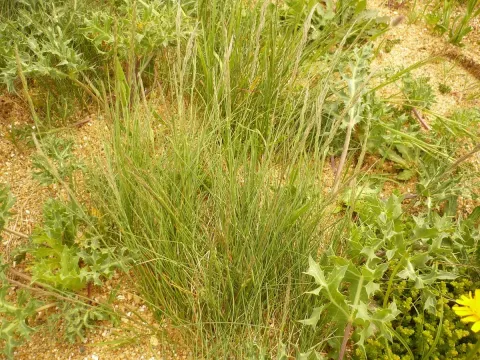
Basque fescue
Festuca vasconcensis
Basque fescue (Festuca vasconcensis) is a perennial grass species belonging to the Poaceae family. It is native to the southwestern regions of Europe, where it is found primarily in high-altitude mountain environments.
What the section contains
Basque fescue
The plant is highly valued for its ability to thrive in challenging environments, including rocky and nutrient-poor soils. It prefers well-drained habitats and is highly effective at stabilizing soil to prevent erosion on slopes.
Regarding climatic requirements, Basque fescue demonstrates excellent cold tolerance and can withstand periods of summer drought due to its deep root system. It prefers moderate temperature regimes and is adapted to the fluctuating humidity levels of mountain ecosystems.
Botanically, this grass grows in dense tufts with narrow, stiff foliage. The plant's structure is a classic adaptation for mountain species, allowing it to minimize water loss and withstand mechanical stress from wind and grazing animals.
In agricultural practice, Basque fescue is utilized mainly as part of natural pastures. Its primary value lies in its longevity and resilience, providing reliable forage for livestock in regions where more demanding grasses cannot survive.
Like many Festuca species, Basque fescue can be susceptible to rust diseases if conditions become overly humid and stagnant air flow persists. Maintaining proper plant spacing helps reduce the prevalence of fungal spores.
Pests such as grass aphids may occasionally attack the plants during particularly hot and dry periods. Regular monitoring is advised to detect early signs of infestation and prevent damage to the photosynthetic tissue.
Soil-dwelling pests like wireworms may affect the root system in younger plants. Integrating this species into diverse crop rotations helps maintain biological balance in the soil and lowers pest pressure.
Weed competition is most critical during the establishment phase, as Basque fescue grows relatively slowly in its first year. Ensuring a clean seedbed and appropriate sowing depth are vital agronomic steps.
Overall, the species possesses strong natural immunity to many agricultural pests. It remains a robust choice for sustainable pastoral systems that minimize reliance on chemical inputs and synthetic protection products.