
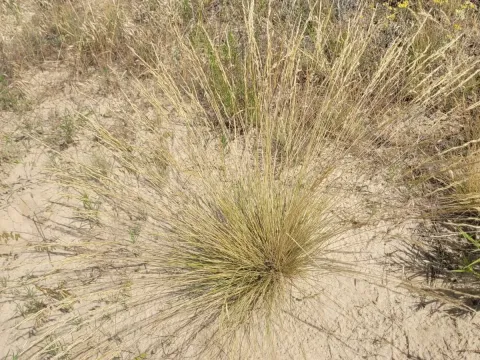
Becker's fescue
Festuca beckeri
Becker's fescue (Festuca beckeri) is a perennial grass species belonging to the Poaceae family. It is primarily found in the steppe regions of Eurasia, where it has evolved to thrive in environments characterized by significant temperature fluctuations and low precipitation levels.
What the section contains
Becker's fescue
Botanically, this species is a dense-tufted bunchgrass with a robust root system. Its narrow, rigid leaves are often grey-green, which helps the plant reduce transpiration, making it exceptionally well-adapted to arid conditions and sandy environments.
The plant has moderate requirements regarding soil quality, showing impressive performance in sandy or loamy soils where many other forage grasses would struggle. It is highly valued for its drought tolerance and cold hardiness, ensuring survival even in harsh continental climates.
In terms of agricultural management, Becker's fescue does not require high levels of fertilization. Its natural hardiness allows for establishment on marginal lands, including areas prone to wind erosion, where it acts as a stabilizer for the soil surface.
The primary agricultural use of this culture is for grazing and hay production. It is highly valued for its ability to regrow rapidly after defoliation, providing a consistent source of palatable forage for livestock throughout the grazing season.
Becker's fescue possesses a high natural resistance to many common fungal diseases affecting graminoids. The risk of disease outbreaks is generally low, provided that the plant density is managed correctly to ensure adequate airflow within the canopy.
Under conditions of excessive humidity, some instances of rust or powdery mildew may occur. Management strategies to mitigate these risks include rotational grazing or timely mowing, which prevents the buildup of old, stagnant biomass where pathogens thrive.
Insect pests, such as aphids or cereal flies, can occasionally affect the growth rate of the grass. However, the resilient nature of this species usually allows it to recover quickly from minor pest pressure without the need for intensive chemical interventions.
Weed competition is most significant during the establishment phase. Ensuring a clean seedbed and using proper seeding rates are the most effective ways to prevent weeds from outcompeting the fescue during its early growth stages.
Sustainable pasture management is essential to prevent overgrazing, which is the main threat to the long-term health of the stand. By allowing periods of rest, the fescue maintains its competitive advantage over undesirable vegetation and pests.