
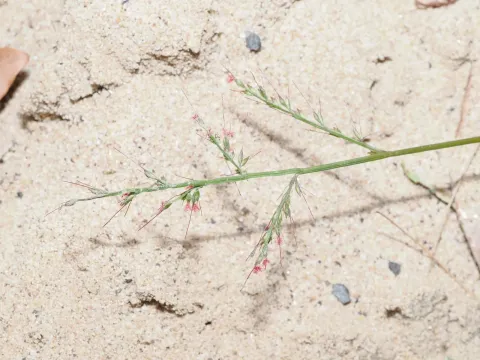
Basket grass
Oplismenus hirtellus
Oplismenus hirtellus, commonly known as basket grass, belongs to the Poaceae family. This perennial grass is native to the tropical and subtropical regions of the Americas, Africa, and Asia, known for its trailing, creeping growth habit.
What the section contains
Basket grass
The plant thrives in bright, indirect light. Direct sunlight can scorch its delicate foliage, so it is best kept in a location with filtered light or partial shade to maintain its vibrant green color.
The ideal temperature range for basket grass is between 20°C and 25°C during the growing season. In the winter, the plant prefers cooler temperatures, but it should not be exposed to anything below 12°C.
Soil requirements for this species include a well-draining, nutrient-rich potting mix. A combination of peat moss, perlite, and standard potting soil provides the necessary aeration for healthy root development.
Watering should be consistent throughout the active growing period. The soil must remain moist to the touch; however, waterlogging must be avoided to prevent root rot, as the plant is sensitive to sitting in stagnant water.
The most common pests affecting basket grass are spider mites and mealybugs, which tend to infest the plant if the surrounding air humidity is too low for an extended period.
Management of these pests involves increasing ambient humidity through misting and applying appropriate horticultural soaps or systemic insecticides if necessary.
Fungal diseases are typically associated with over-watering and poor air circulation. Symptoms often include yellowing leaves and soft, decaying roots that require immediate attention.
Prevention relies on establishing a proper drainage system and avoiding soil compaction, which can suffocate the roots and create an environment conducive to pathogens.
Pruning is recommended to maintain the plant's shape and to remove any withered stems, which helps in preventing the spread of diseases and promotes dense, bushy growth.