
Bear Poa
Poa ursina
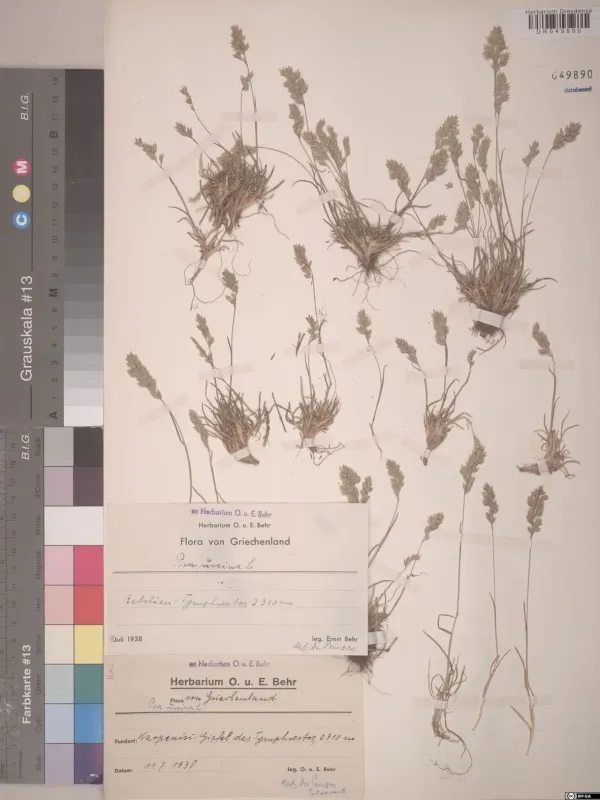
Description
Growing requirements
Bear Poa, known scientifically as Poa ursina, is a perennial grass species belonging to the Poaceae family. This plant is naturally adapted to high-altitude environments, where it has evolved to thrive in harsh, rocky, and exposed conditions.
The plant is characterized by its distinct cushion-like growth habit, forming dense, low-growing mounds of slender, blue-green leaves. Its morphological structure is designed to minimize moisture loss, making it highly resilient in arid or windy climates.
Sunlight is a critical requirement for this species. It demands full sun exposure to maintain its compact, attractive structure. Partial or deep shade negatively affects the plant's growth, often causing it to become leggy and lose its unique aesthetic appeal.
Soil requirements for Bear Poa include excellent drainage and a relatively low nutrient profile. It performs exceptionally well in gravelly or sandy soils that mimic its native alpine habitat. Heavy, water-retentive soils must be avoided to prevent root rot.
The cultural maintenance of Poa ursina is minimal. Once established, it demonstrates remarkable drought tolerance. It is fully hardy and capable of surviving extreme winter temperatures without the need for additional protective covering.
Yield
In an agricultural context, Bear Poa is primarily utilized within the ornamental horticulture industry rather than as a forage or field crop. It is highly valued for its slow growth rate, which reduces the need for frequent maintenance.
Its main applications include rock gardens, alpine troughs, and xeriscaping projects. The plant’s ability to remain compact and stable over many years makes it a preferred choice for long-term landscaping and structural design.
Seed production is limited by the plant’s biological nature and slow development, resulting in a niche market for its propagation. Most propagation is conducted by nurseries specialized in alpine or rare grass species using hand-harvesting techniques.
Due to its high decorative value and low-maintenance characteristics, it serves as an ideal ground cover in environments where traditional lawn grasses would fail to thrive due to soil poverty or extreme exposure.
While not a traditional cash crop, the cultivation of Bear Poa is commercially significant in the high-end landscaping market. Growers focus on providing conditions that prevent competition from faster-growing weeds during the establishment phase.
Main diseases and pests
Bear Poa is generally a robust plant with few natural enemies in its native environment. However, when cultivated outside its natural habitat, it can be susceptible to fungal diseases caused by excessive soil moisture.
Root rot, often caused by pathogens like Pythium or Phytophthora, is the most common threat when the drainage is insufficient. Proper site selection and soil amendment are the primary preventive measures against these fungal issues.
In urban or garden settings, competition from aggressive weed species can be a major threat. Since Bear Poa is a slow-growing grass, it can be easily overtaken by vigorous weeds if the planting site is not properly prepared.
Pests are generally not a significant issue for this species. However, under high humidity and poor air circulation, some opportunistic insects or mites may occasionally affect the foliage, though rarely causing permanent damage to healthy plants.
Regular monitoring during the spring growth flush is advised to ensure that the plants are free from competing vegetation. Careful management of water levels remains the most important factor in keeping a collection of Bear Poa healthy and disease-free.