
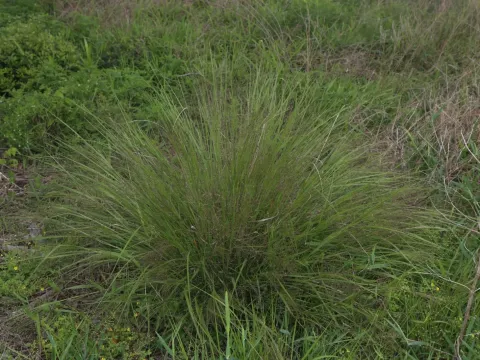
Berg's Millet
Panicum bergii
Sowing of Panicum bergii is typically carried out in the spring season once the soil temperature is high enough to support rapid germination.
What the section contains
Berg's Millet
It is essential to wait for the soil to warm up adequately, ensuring that the ground is free from the risk of late frosts.
Proper seedbed preparation is required to ensure that seeds are placed at the correct depth for optimal moisture access.
Seeds are usually sown at a shallow depth of 2 to 4 centimeters to facilitate uniform emergence across the field.
Selecting high-quality seeds and achieving the right planting density is crucial for ensuring a productive and healthy stand.
Panicum bergii belongs to the Poaceae family and is a perennial grass species native to the savanna regions of South America.
This crop thrives in well-drained sandy or loamy soils and displays high tolerance to varying soil acidity levels.
It is specifically adapted to environments with limited rainfall, making it a robust option for semi-arid agricultural regions.
The plant requires ample exposure to sunlight throughout its vegetative growth phase to accumulate biomass efficiently.
Its high level of environmental plasticity allows it to adapt to diverse ecological conditions, maintaining resilience against stress factors.
The primary agricultural value of this crop lies in its ability to produce reliable quantities of green fodder in challenging environments.
Yield performance is highly dependent on effective nutrient management and appropriate fertilization practices during the growing season.
The plant demonstrates a strong capacity for regrowth after harvesting, allowing for multiple cuttings when conditions are favorable.
As a pasture component, it provides consistent nutritional value for livestock, helping to maintain soil health in grazing systems.
Techniques such as supplementary irrigation can significantly boost the overall biomass yield in areas prone to seasonal droughts.
Common pathological threats include fungal infections such as rust, which can negatively impact the plant's photosynthetic capacity.
Poor drainage and excessive moisture levels often lead to root rot, which is a major concern for long-term stand stability.
Insect pests that target the roots or foliage can cause significant damage, especially during the early stages of plant development.
Crop rotation and strategic use of fungicides or insecticides are essential components of an effective integrated pest management plan.
Regular field monitoring is necessary to identify signs of stress or infestation before they lead to severe yield losses.
Harvesting for hay is most productive when done at the start of the heading stage, ensuring a balance of protein and structural fibers.
Efficient drying methods must be used to preserve the nutrient density of the forage immediately after the crop is cut.
Harvesting for seed production should target the stage of full maturity, marked by a visible change in the color of the panicles.
Using calibrated harvesting equipment is critical to minimize seed loss due to shattering during the mechanical cutting process.
Post-harvest cleaning and storage at controlled moisture levels are required to ensure that seeds remain viable for future planting seasons.