
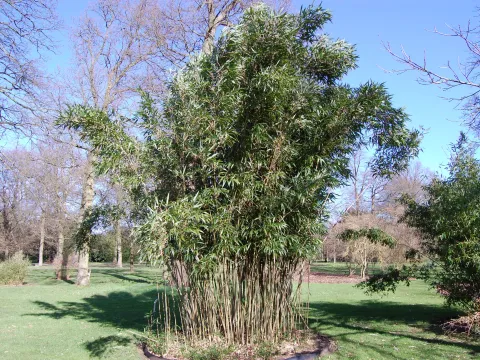
Bashania
Bashania
Bashania is a genus of bamboo within the Poaceae family, known for its vigorous growth and ability to form dense groves via an extensive rhizome system. These plants are recognized for their woody, perennial stems that emerge from the soil in spring.
What the section contains

Bashania
Originating primarily from the mountainous regions of China, these bamboos are adapted to cool, moist environments. They are generally considered more cold-hardy than many other bamboo genera, making them suitable for temperate garden landscapes.
For optimal health, Bashania requires nutrient-rich, well-draining soil with a pH level between 6.0 and 7.0. While they prefer consistent moisture, they cannot tolerate waterlogged conditions, which can lead to rapid decay of the underground rhizome network.
Ideal conditions include a location with partial to full sunlight, shielded from strong winds that might desiccate the leaves. Adequate spacing during planting is essential to ensure proper air circulation and to facilitate maintenance of the expanding root system.
The practical application of Bashania includes land stabilization, hedge formation, and ornamental landscaping. Certain species are harvested for their edible shoots and durable culms, which are used in craft manufacturing and light structural gardening projects.
Bashania is susceptible to various fungal pathogens, such as rust and leaf spot, particularly in environments with high humidity and poor air circulation. Effective management starts with selecting resistant varieties and ensuring adequate drainage.
Insect pests, including aphids and spider mites, often target the tender new growth of the plant. These infestations can weaken the bamboo, making it prone to secondary infections and reducing its overall aesthetic and structural integrity.
Cultural practices such as thinning out old or damaged culms are vital to prevent the accumulation of pests and disease spores. Maintaining a clean garden environment around the base of the plant reduces the risk of pest colonization.
If chemical intervention is required, it is recommended to use systemic insecticides that target specific pests while minimizing harm to beneficial insects. Always apply treatments in accordance with local agricultural guidelines.
Nutrient deficiencies, specifically a lack of nitrogen, can lead to chlorosis, which makes the plant more susceptible to stress. Providing a balanced, slow-release fertilizer during the active growing season is crucial for building plant resilience against common threats.